



Learn how XR-5 Geomembrane was used to line a 6.8-acre industrial evaporation pond at Calaveras Power Station in Texas, providing reliable containment, broad chemical resistance, UV stability, and long-term durability for wastewater management.
Project Details: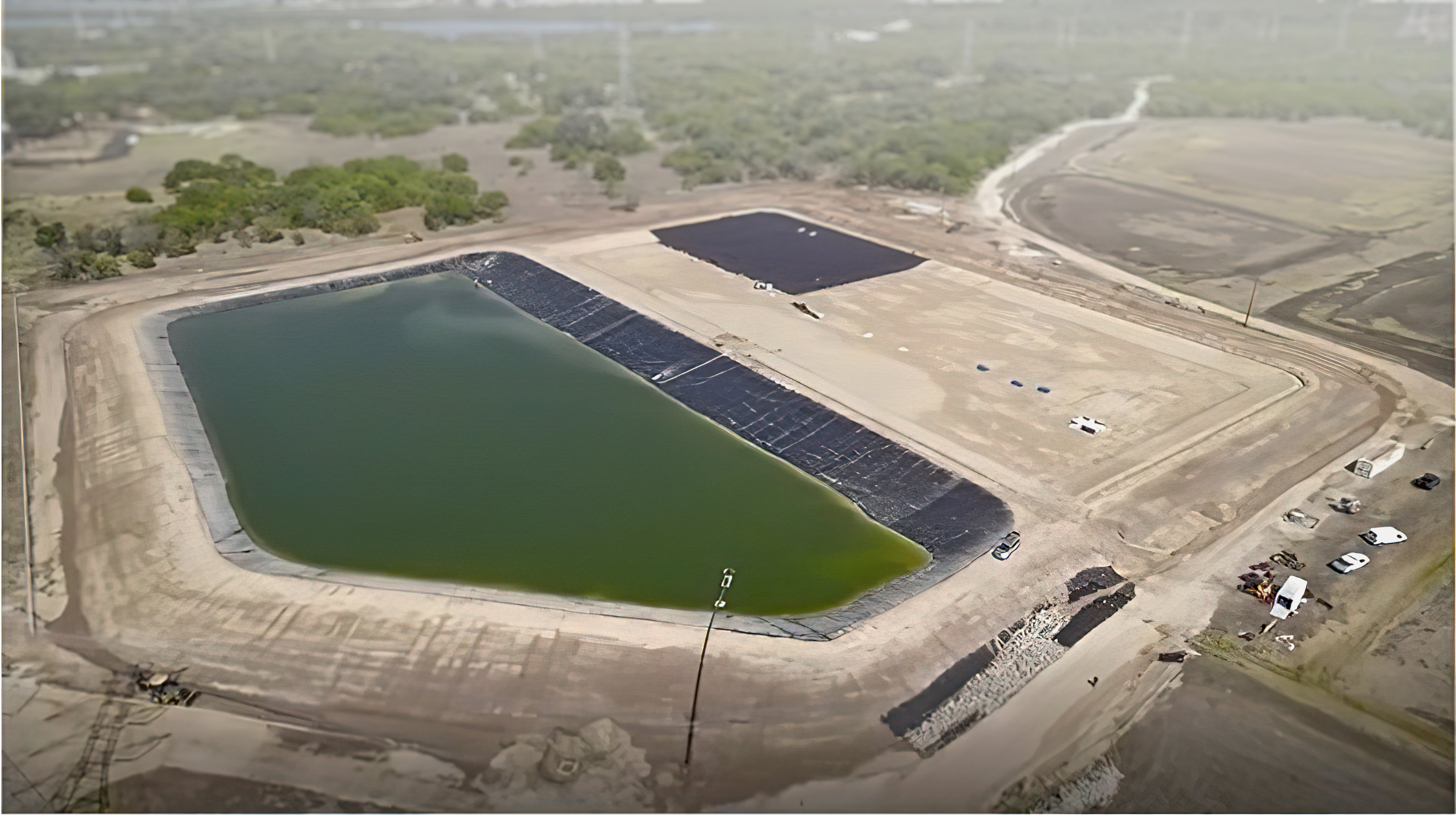
Name: Calaveras Power Station
Purpose: Industrial Evaporation Pond
Date Installed: July 2022
Location: San Antonio, TX U.S.A.
Solution: 8138 XR-5® Geomembrane
Owner: CPS Energy
Engineer: Burns and McDonnell
Fabricator & Installer: EnviroCon Systems Inc.
Project Story:
Coal Combustion Residue (CCR), historically termed Fly Ash when in a dry state, came under increased scrutiny after a major breach in the Fly Ash slurry holding impoundment at the Tennessee Valley Authority’s Kingston Tennessee generating plant in 2008. Subsequent Federal regulations, following solid and hazardous waste management regulations in previous decades, called for upgraded standards for design of CCR management facilities, or Engineered closure of existing non-compliant sites. 40 CFR Part 257 established a date of April 11, 2021 for CCR generating facilities to stop receiving at non-compliant sites.
CPS Energy (CPS) operates several coal powered generation units. CPS is owned by the City of San Antonio and is the largest municipally owned energy utility in the U.S. CPS’s Calaveras Power Station is located on Calaveras Lake, within the city, and operates several CCR disposal units and other CCR and non CCR surface impoundments. One of those units was an active evaporation pond that was originally constructed as a fly ash landfill in 1990 and then converted to a fly ash impoundment in 1996. After 1996, the function changed to evaporation of industrial liquids. It had not received CCR waste since that time, but due to its history, it had to either enter CCR compliant closure or upgrade to CCR standards. Agreement was reached between the Environmental Protection Agency and the owner which allowed the pond to continue operation until a new upgraded evaporation pond could be constructed and then initiate closure on the existing pond.
Evaporation is twice the amount of rainfall on average in the San Antonio area. Therefore, evaporation ponds work well separating water from many waterborne contaminants. The existing evaporation pond received 1 to 2 million gallons (3,785 to 7,570 cu m) per year, batch dumped from tank trucks directly into the pond. The new facility would receive the same wastes which was comprised of the following:
- wastewater from the boiler
Existing Evaporation Pond. Source: ERM Southwest
- cleaning liquids
- ion exchange, steam turbine
- cleaning liquids
- plasma cutter liquids
- acid/base vessel cleaning liquids
- spill clean-ups
- laboratory analyte solution liquids
- air preheater basket cleaning liquids
- heat exchanger condenser cleaning liquids
- circulating water from service activities on plant equipment
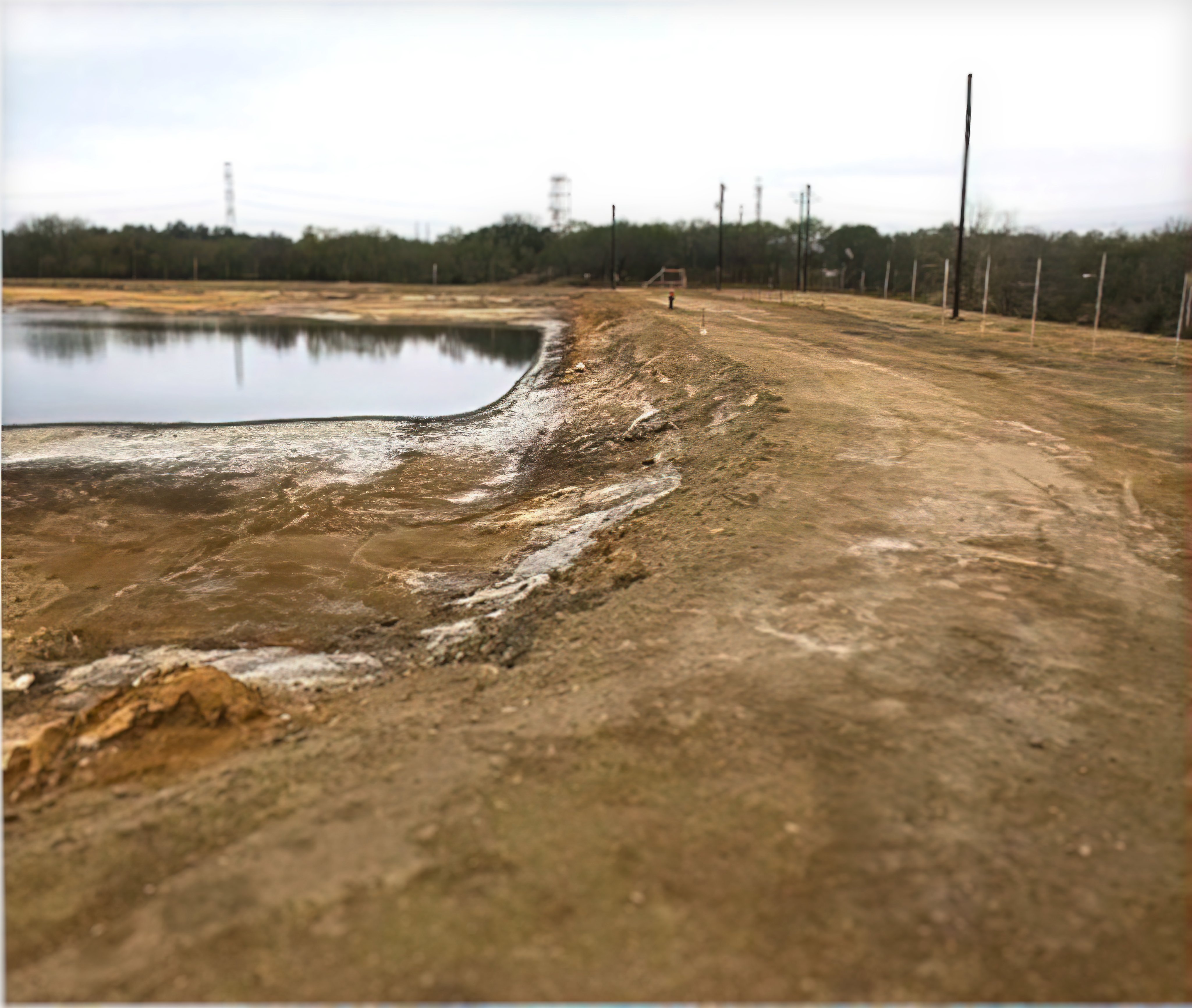
The large majority of the disposed liquids were reported to be metal cleaning wastes generated during discrete maintenance events over a relatively short period of time. Power generation could not occur without the generation and onsite management of these wastes.
Additionally, the domestic wastewater generated onsite at the Station was to be rerouted from 4 individual treatment plants into a single treatment facility at the new evaporation pond, with treated wastewater discharged to the pond. This eliminated 4 permitted discharges to Calaveras Lake.
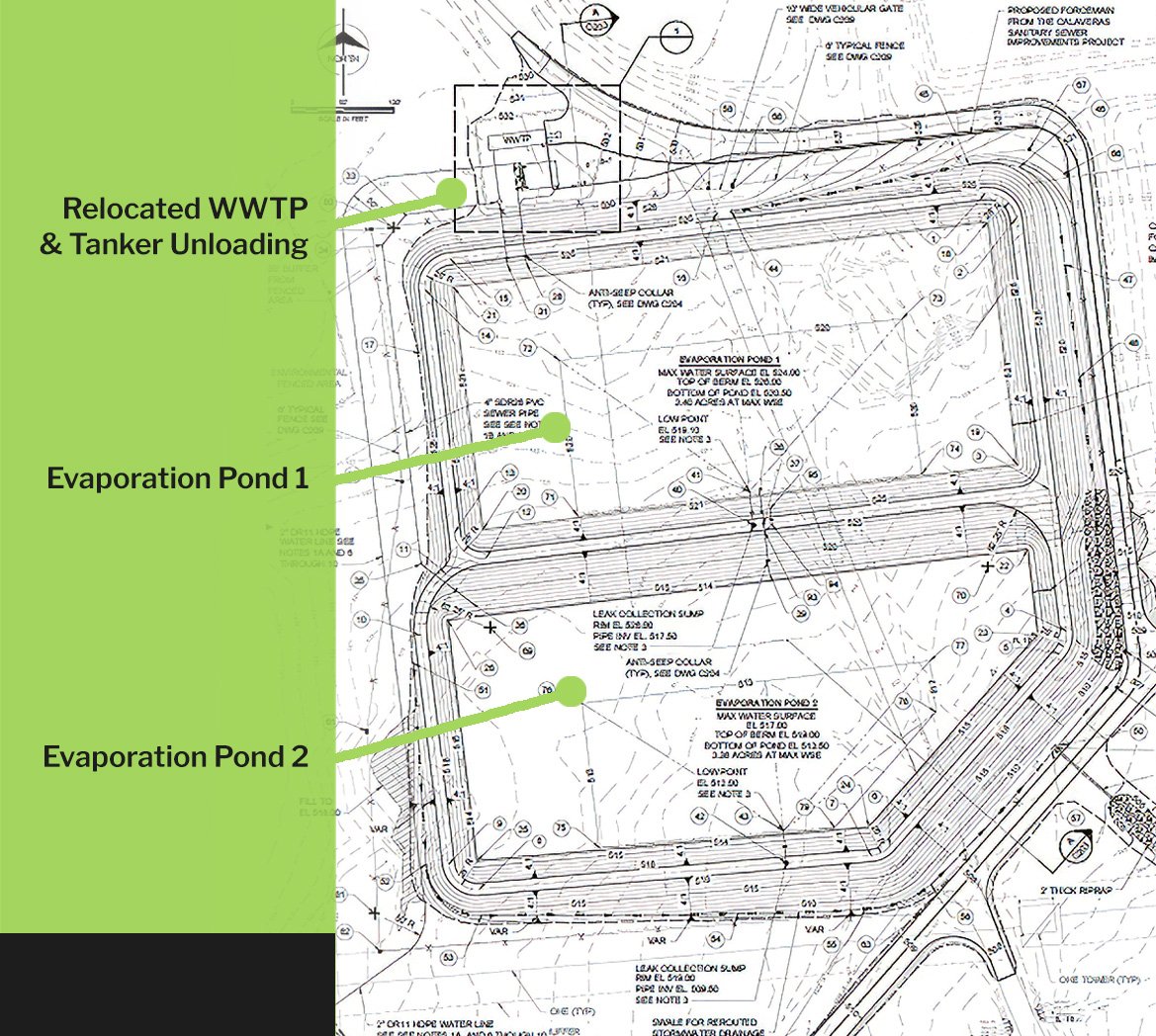
Project Engineer Burns and McDonnell designed the evaporation pond with these features.
- Located within the Power Station complex.
- Two adjacent earthen impoundments separated by a common berm. Two units provided more operational and maintenance flexibility. Site layout is shown below.
- Water depth maximum was 3.5 ft (1.1 m) with 2 ft (0.6 m) of freeboard. Each pond was 3.4 acres (1.4 ha) at maximum water depth. Shallow depth enhances evaporation, taking advantage of heat and wind.
- Interior side slopes were 4:1.
- The domestic wastewater treatment plant was sited upgradient from pond 1, which was upgradient from pond 2.
- Bulk dump facilities were provided at the adjacent domestic wastewater treatment plant with normal discharge to Pond 1. Pond 1 contents could be routed to Pond 2, and Pond 1 would overflow to Pond 2. Treated domestic wastewater could be routed to either pond.
- No off site discharge was provided for either pond.
- Pressurized water was provided to the site for cleaning purposes.
Calaveras Evaporation Ponds Site Plan. Source: Burns & McDonnell
With these characteristics in place, attention turned to selection of the lining system. Technically regulated as an industrial evaporation pond by the Texas Commission on Environmental Quality (TCEQ), the barrier alternatives were:
- Clay rich soil, 3.0 ft (0.9 m) minimum thickness at 1 x 10 -7 cm/sec hydraulic conductivity, or
- Geomembrane, > = 40 mil (1 mm) thickness, compatible with stored content, covered if vulnerable to Ozone or UV induced degradation.
The following site operational considerations were important in geomembrane selection:
- Evaporation ponds rely on heat to work efficiently. An exposed, black geomembrane was needed.
- The complexity of the liquids entering and remaining in the ponds dictated the need for broad and proven chemical resistance. Further, any concerns with surfactants in combination with heat had to be considered.
The original project schedule which was part of the EPA-CPS plan called for the new evaporation pond to begin receiving waste liquids 22 months after project initiation (operational 5/20/2022). As schedules go, the project was behind during mid-2022 and certainly needed no delays due to geomembrane installation. The XR-5 geomembrane was specified for the barrier material due to several reasons including:
- It did not require protective cover.
- It is resistant to high temperatures and not subject to diurnal temperature-induced thermal expansion contraction (CTE). CTE causes seam fatigue, stress cracking and maintenance issues at connections. High temperature also lowers seam strength of many materials.
- XR-5 has the broadest range of proven chemical resistance of any geomembrane and has been used in many mixed waste environments.
- The compound is highly UV stable with documented exposed application life as much as 38 years. The compound is specifically formulated for stability and for long service life.
- It is heavily fabric reinforced, giving it high puncture and tensile strength. Seam strength equals parent material strength, therefore not creating a weakest link.
- Because it is flexible, it was prefabricated into large panels, making installation faster and more reliable. Less field seams and Construction Quality Assurance helped get the project closer to the originally planned completion date.
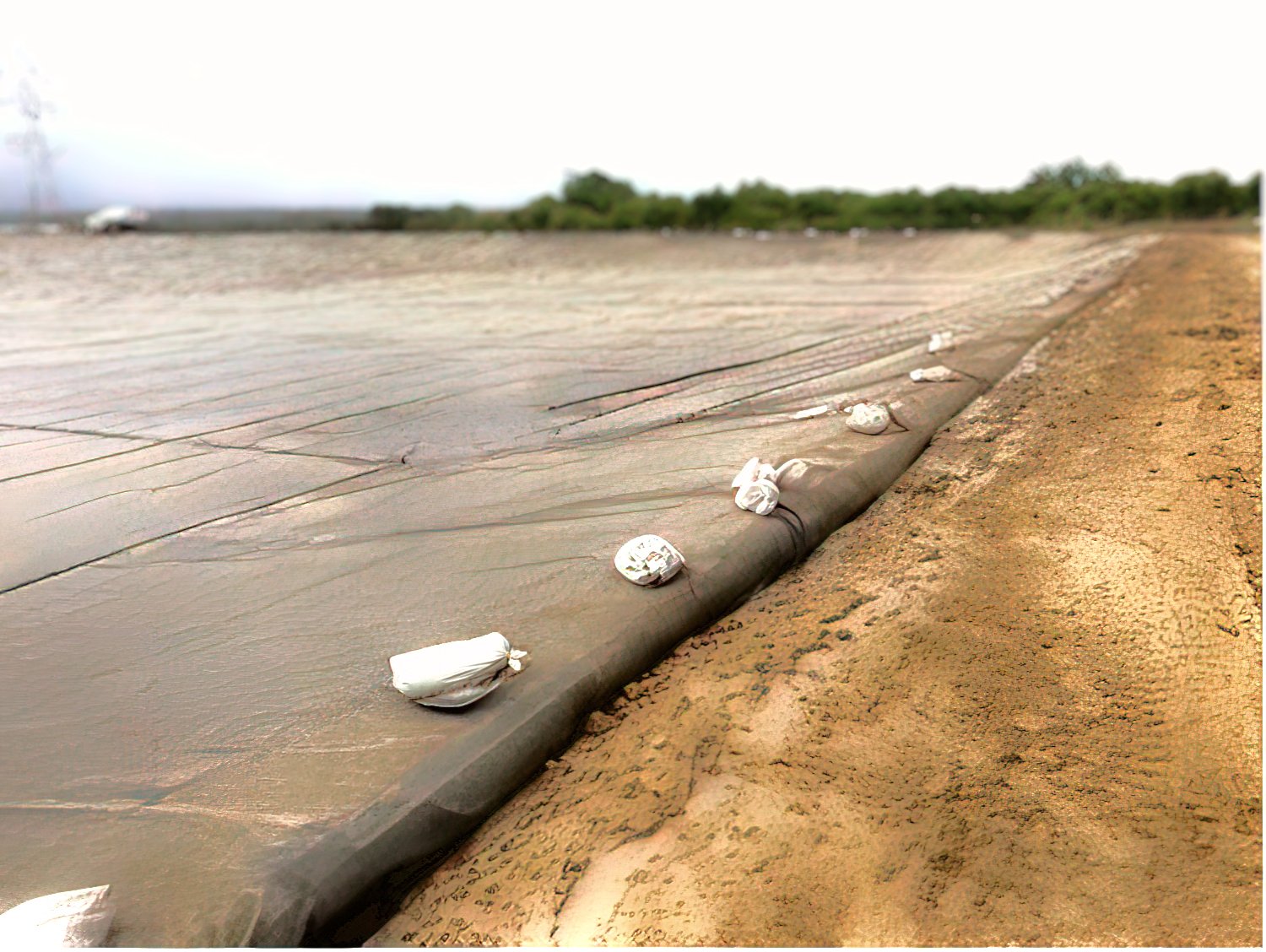
XR-5 Geomembrane installation. Calaveras Evaporation Pond No. 2. Note shallow depth.
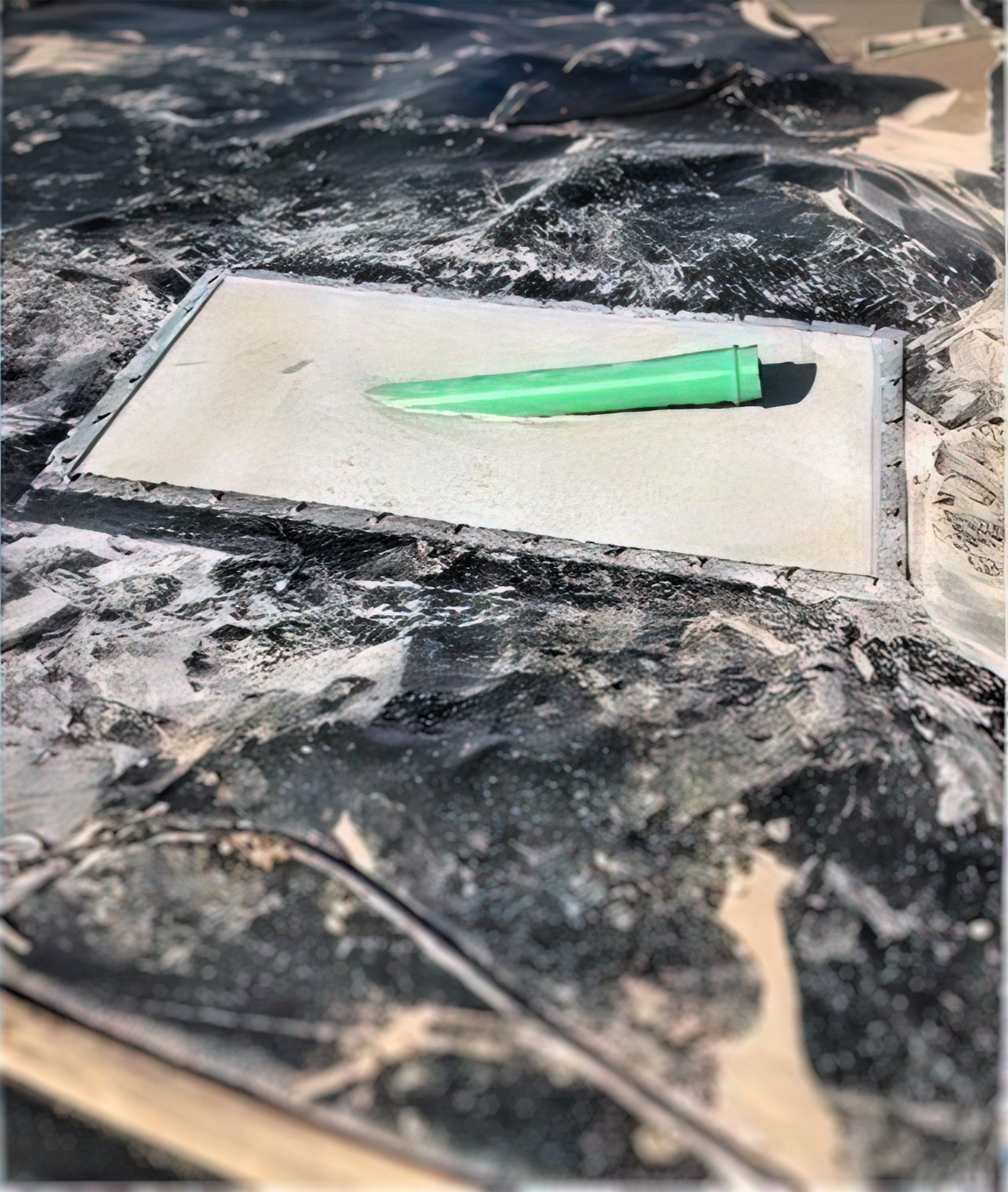
Pipe penetration through the XR-5 Geomembrane with Anti-seep pipe penetration collar. Mechanically battened to the geomembrane at concrete perimeter.
Per TCEQ regulations, an underdrain system was constructed under the geomembrane. It consisted of a Multiflow Varicore flat pipe system installed in a grid arrangement. The Multiflow system also provides for gas venting under the geomembrane. Within the grid areas, a 200 mil (5 mm) double sided 8 oz (225 g) geocomposite was installed to collect and direct any flow to the pipe system. The geocomposite has high in-plane liquid transmission rates and is protected on both sides by a geotextile. The underdrain system for both ponds sloped to separate collection and monitoring sumps.
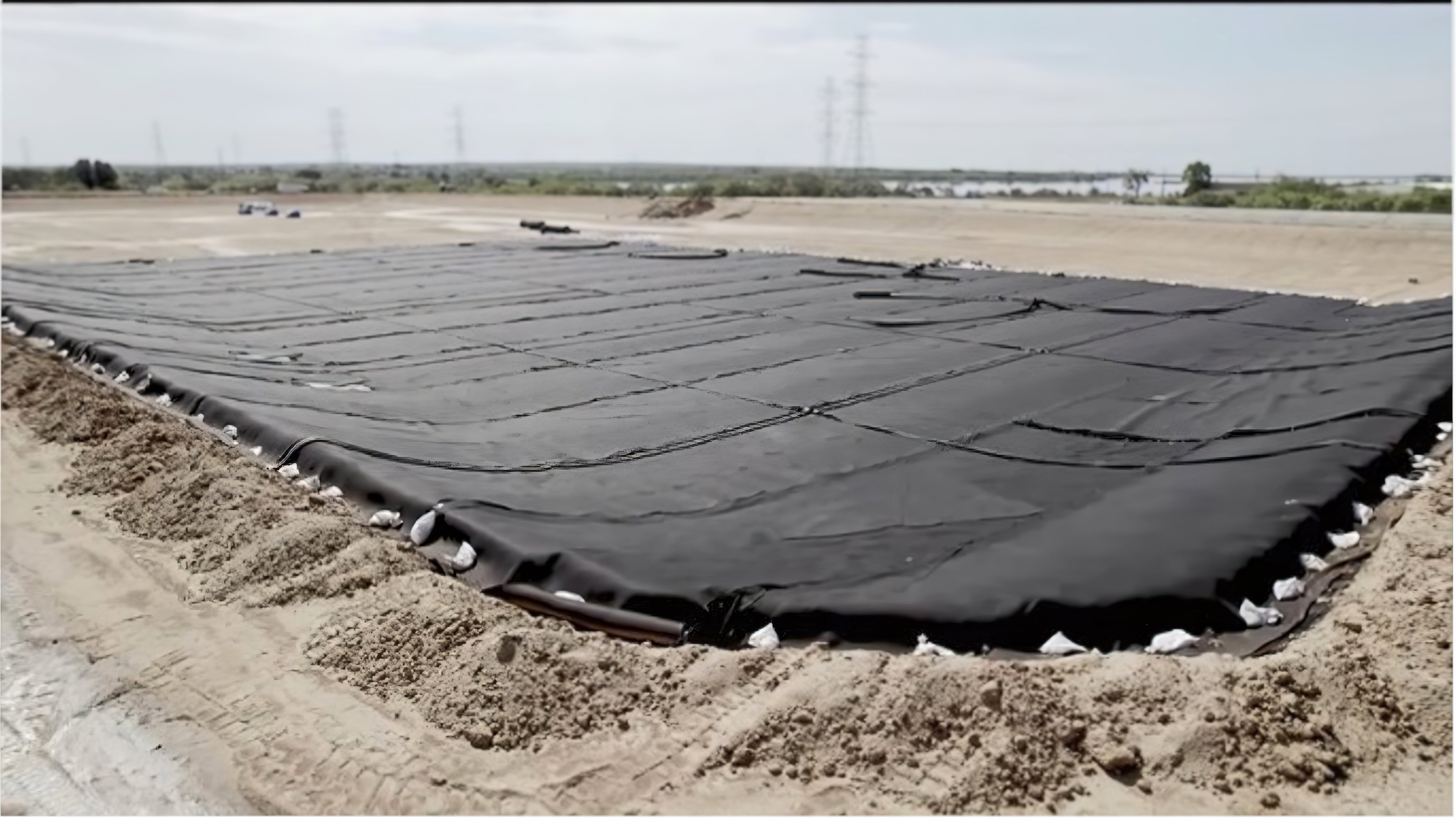
Geocomposite Installation in Pond 1.
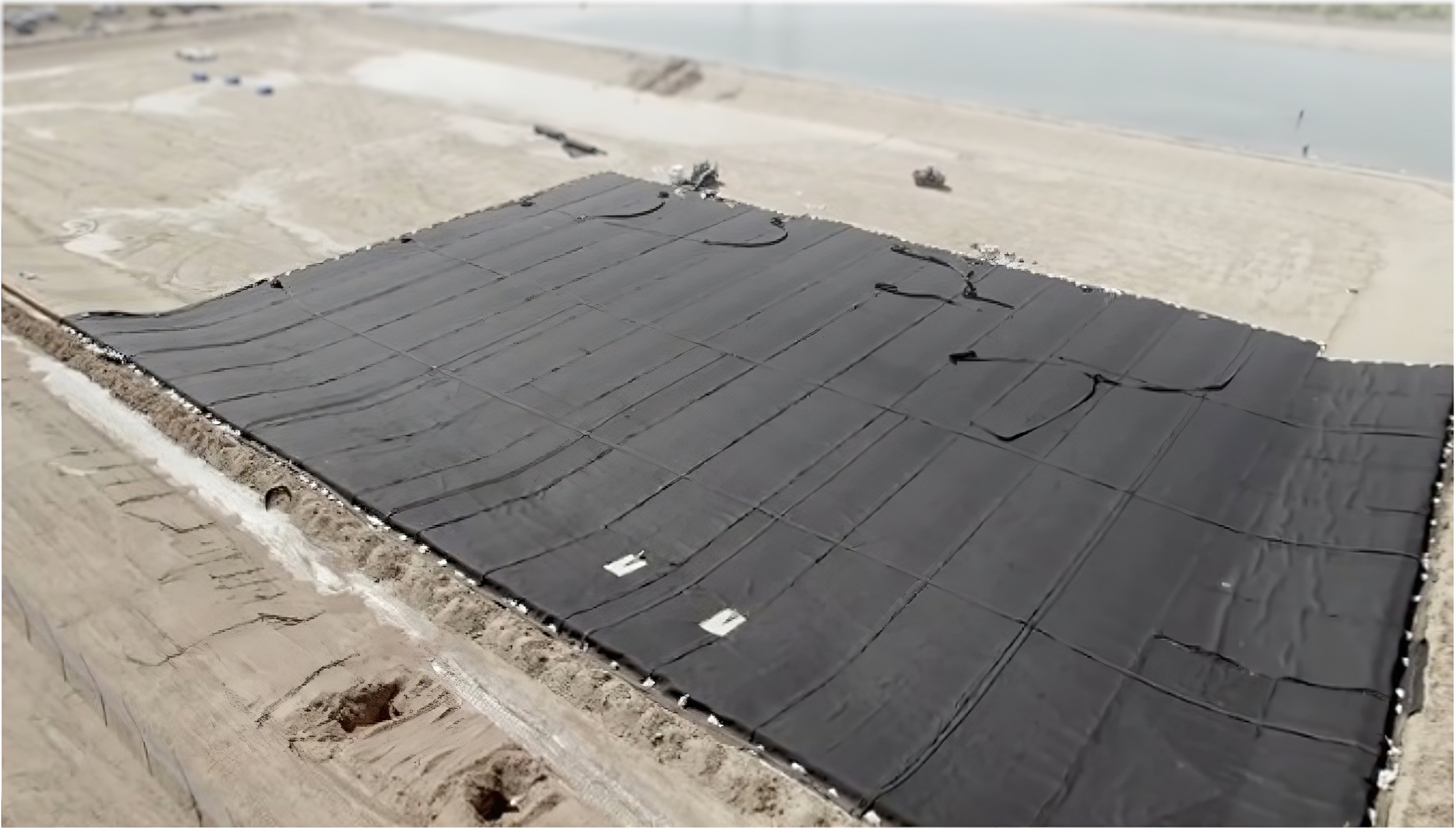
Geocomposite Installation in Pond 1.
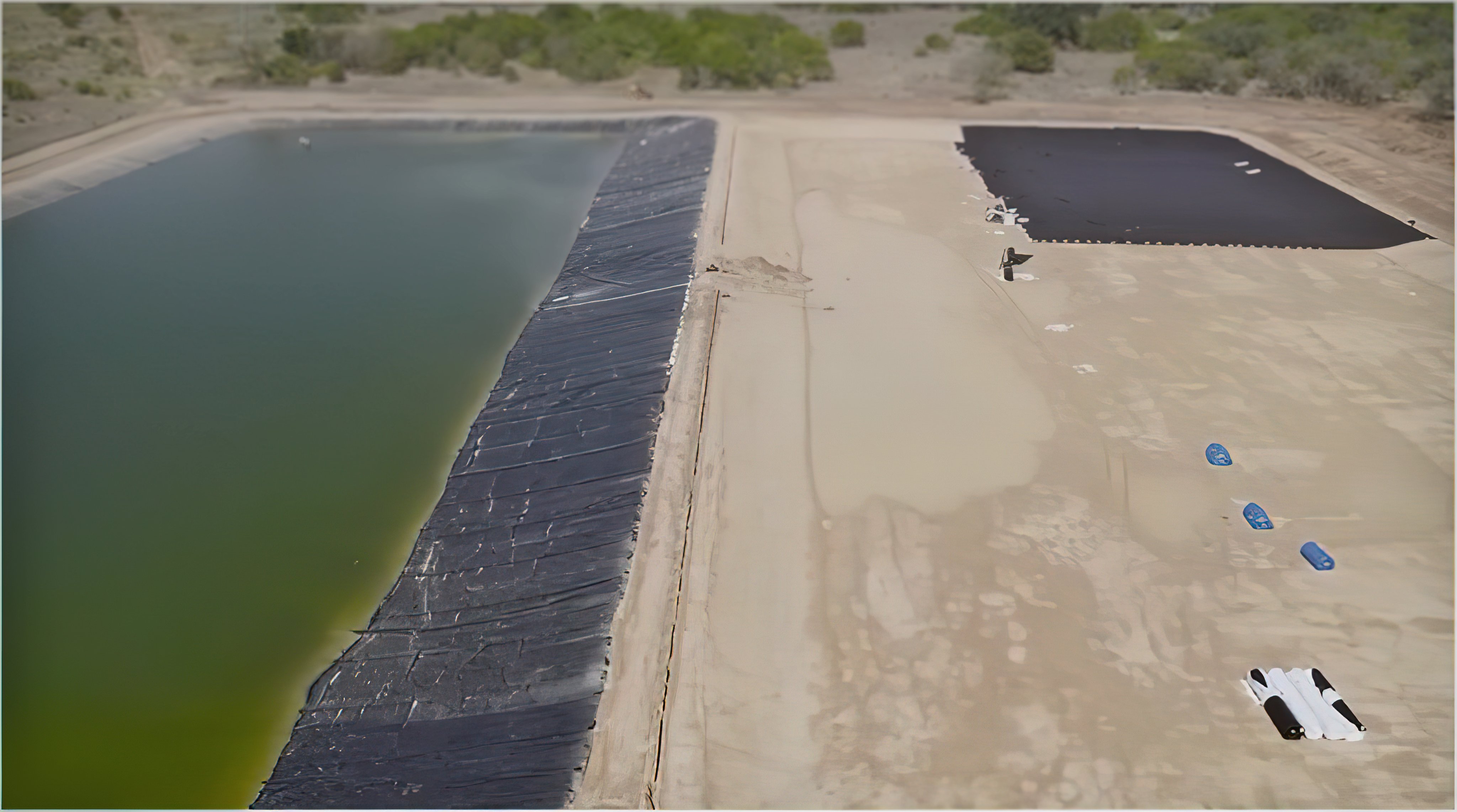
Completed XR-5 Geomembrane in Calaveras Evaporation Pond 2.
Completed XR-5 Geomembrane in Calaveras Evaporation Pond 2.
Completion of the barrier system for pond 2 preceded pond 1 as it was downgradient. Water was placed in pond 2 and the underain system was monitored to ensure a liquid tight installation of the XR-5 geomembrane. Upon completion and testing of the pond 1 geomembrane, the facility began receiving wastewater from the Calaveras Power Station. With the new Evaporation Ponds operational, the closure and upgrading of the CCR units will proceed.
When containment applications demand broad performance with reliable installation and proven longevity, Industries and designers choose the XR-5 Geomembrane.
All photos sourced from Envirocon Systems Inc. unless noted otherwise.