




Three-Part Series: Understanding and Assuring Proper Geomembrane Chemical Resistance
Part 1: Top Reasons Chemical Resistance Is a Very Important Geomembrane Property
In this series, we’ll take a look at why chemical resistance decisions are important, what industry data means and the best ways to properly evaluate geomembrane chemical resistance performance.
The origins of synthetic liner use in North America go back to canal lining by the U.S. Bureau of Reclamation. Initial efforts were centered on constructability and longevity (primarily sunlight resistance). The application was containment of irrigation water in arid areas. All materials were considered to be resistant to water. One of the first documents on canal linings was published by the Bureau in 1963.
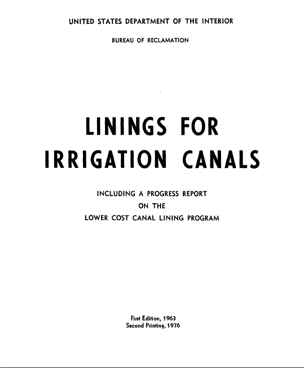
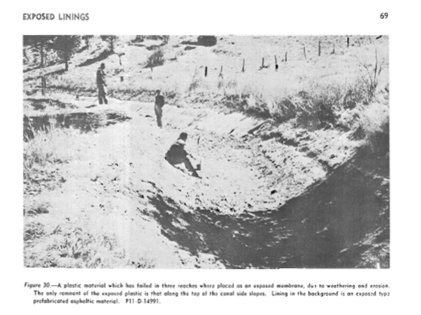
Source: U.S. Bureau of Reclamation
It would seem containing potentially incompatible liquids developed as something of a sideline. In fact, even ASTM D4439 describes geomembranes as “A very low permeability synthetic membrane liner or barrier used with any geotechnical engineering related material so as to control fluid (or gas) migration in a human-made project, structure, or system.” The definition is sufficiently broad that one could imply that containment of aggressive liquids is an attribute of geomembranes.
By the 1970s, designers were discovering uses for geomembranes that stretched the ability of many polymers. During that era, our company developed the XR-5 Geomembrane as a blended polymer in response to the void in petroleum-resistant geomembranes.
Today, we get compatibility questions daily, owing to the very broad use of these engineered products. In many cases, chemical compatibility is the primary selection criteria. Usually, however, it is one of several factors because resistance to some liquids is influenced by the application itself along with mechanical and environmental effects that are beyond compatibility alone.
Nonetheless, engineered controls may be necessary to compensate for inadequate chemical resistance, typically in the form of upstream treatment. That is not desirable, is costly and will usually introduce a search for alternative geomembranes and/or technologies.
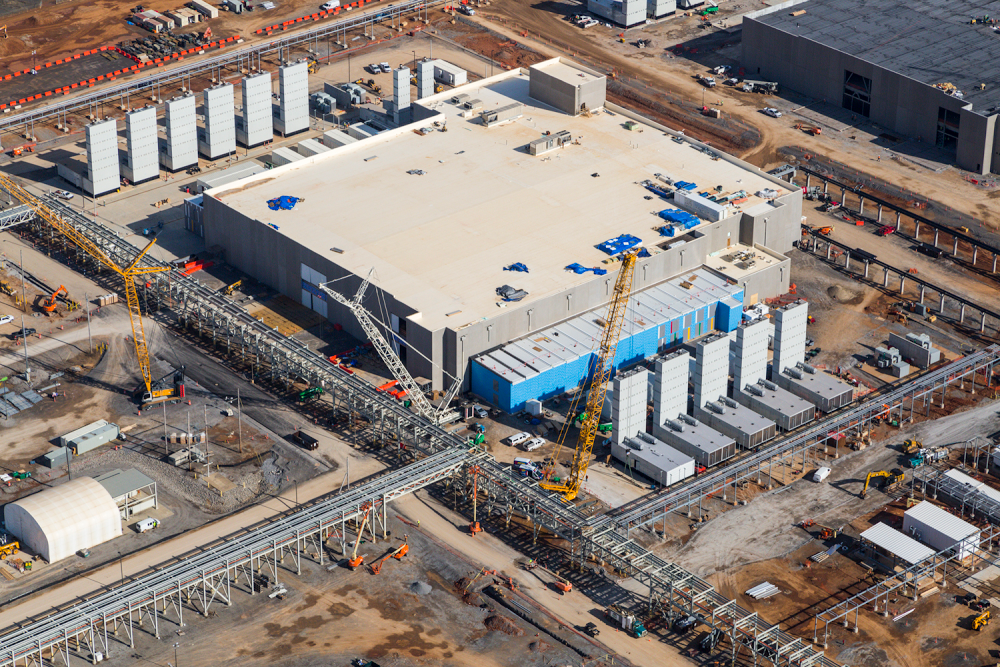
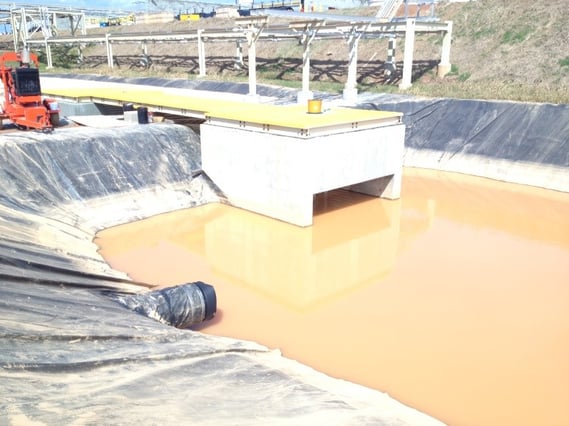 XR-5 Geomembrane lined Metals Processing
Chemical resistance of geomembranes is important because:
- The chemical resistance potentially offered by a geomembrane is normally a desirable upgrade compared to other containment technologies (natural material such as clay, concrete, asphalt, etc.).
- Resistance to contained liquids is essential for the longevity of the geomembrane.
- It is one of the first gateway decision points in the selection process. It requires careful and thorough investigation in the selection process.
- It is a basic property that can be easily misunderstood or misinterpreted.
- Manufacturer’s data can be unclear or incomplete or can be not supported by actual data.
- Chemical resistance can be a property that is influenced by-and influences-other performance properties.
In the next segment, we will review how to overcome difficulties in interpreting chemical resistance data.