

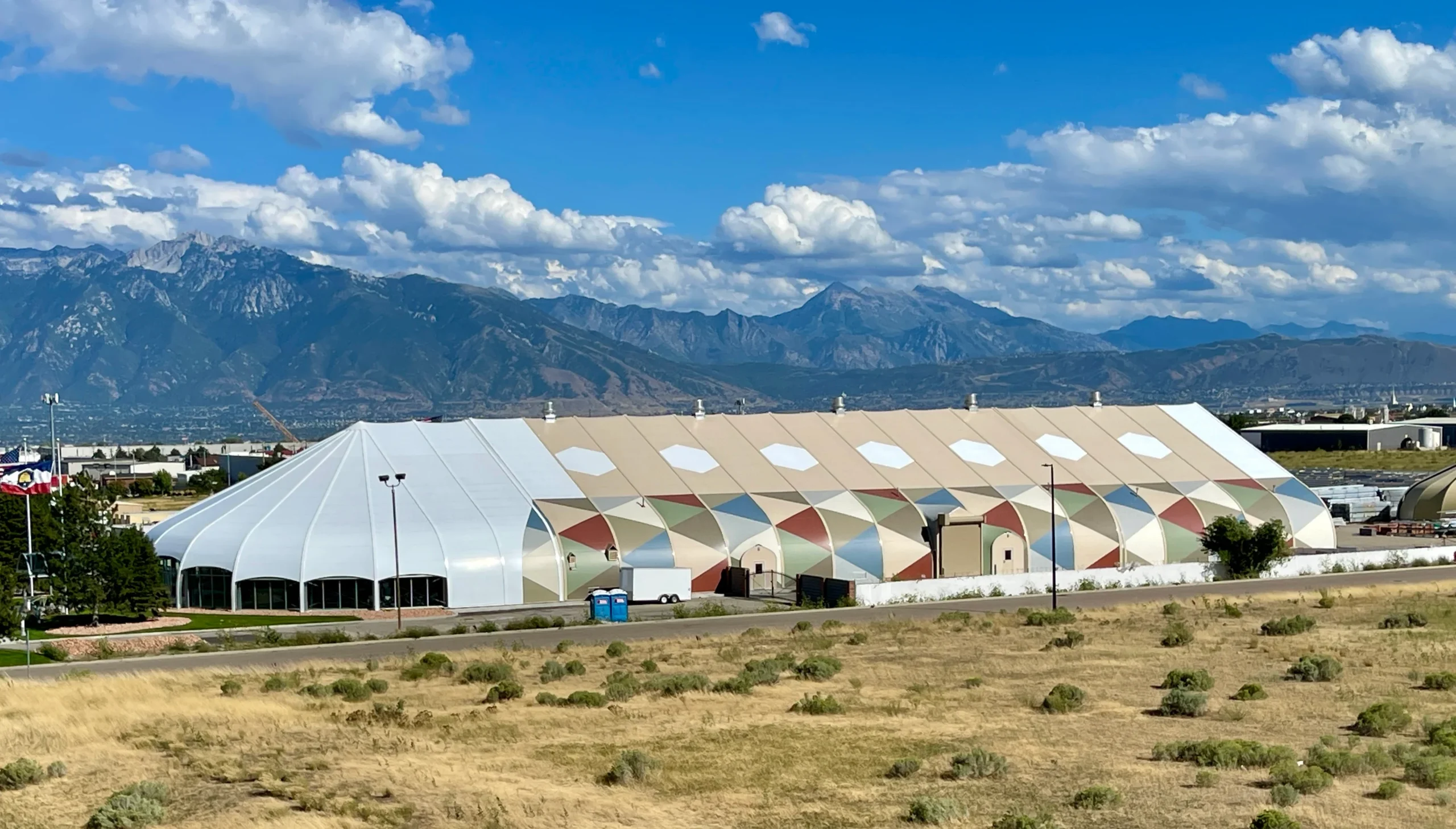

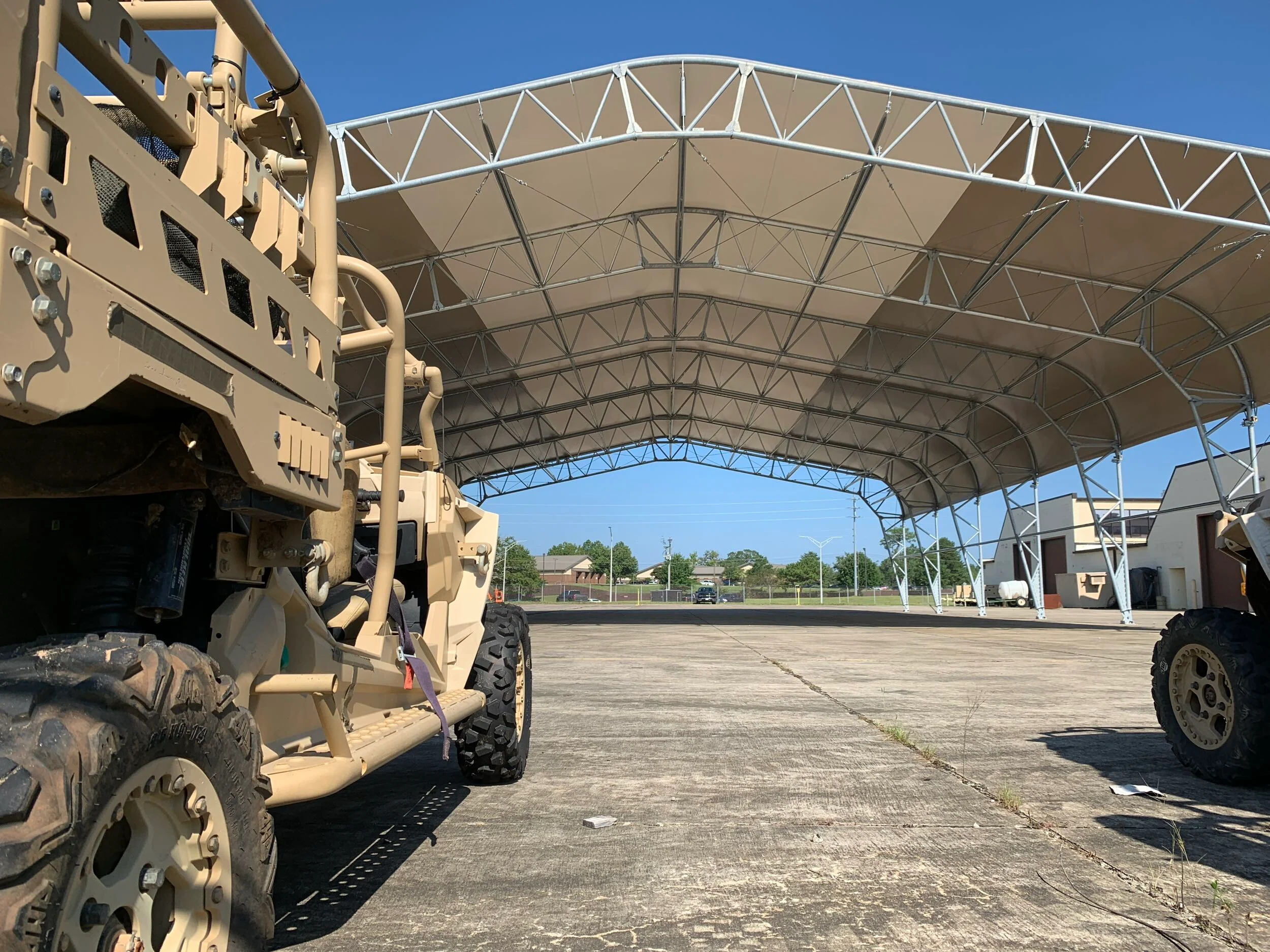

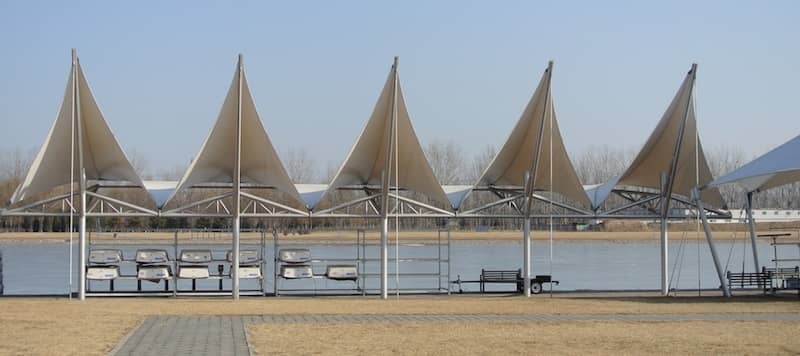
 Tension structures are seemingly installed in the blink of an eye. However, there are specific steps installation teams must follow. Six steps are detailed in this post to help assist installation teams and building owners during their own installations.
Mobilization
The first stage of a successful fabric structure installation begins with site inductions. Installers should make sure everyone participating with the install is aware of their specific responsibilities as well as the overall operation of the site. This will minimize any confusion that might happen after the project kicks off. After everyone is brought up to speed, your install team should perform a safety analysis of the site and equipment. This includes:
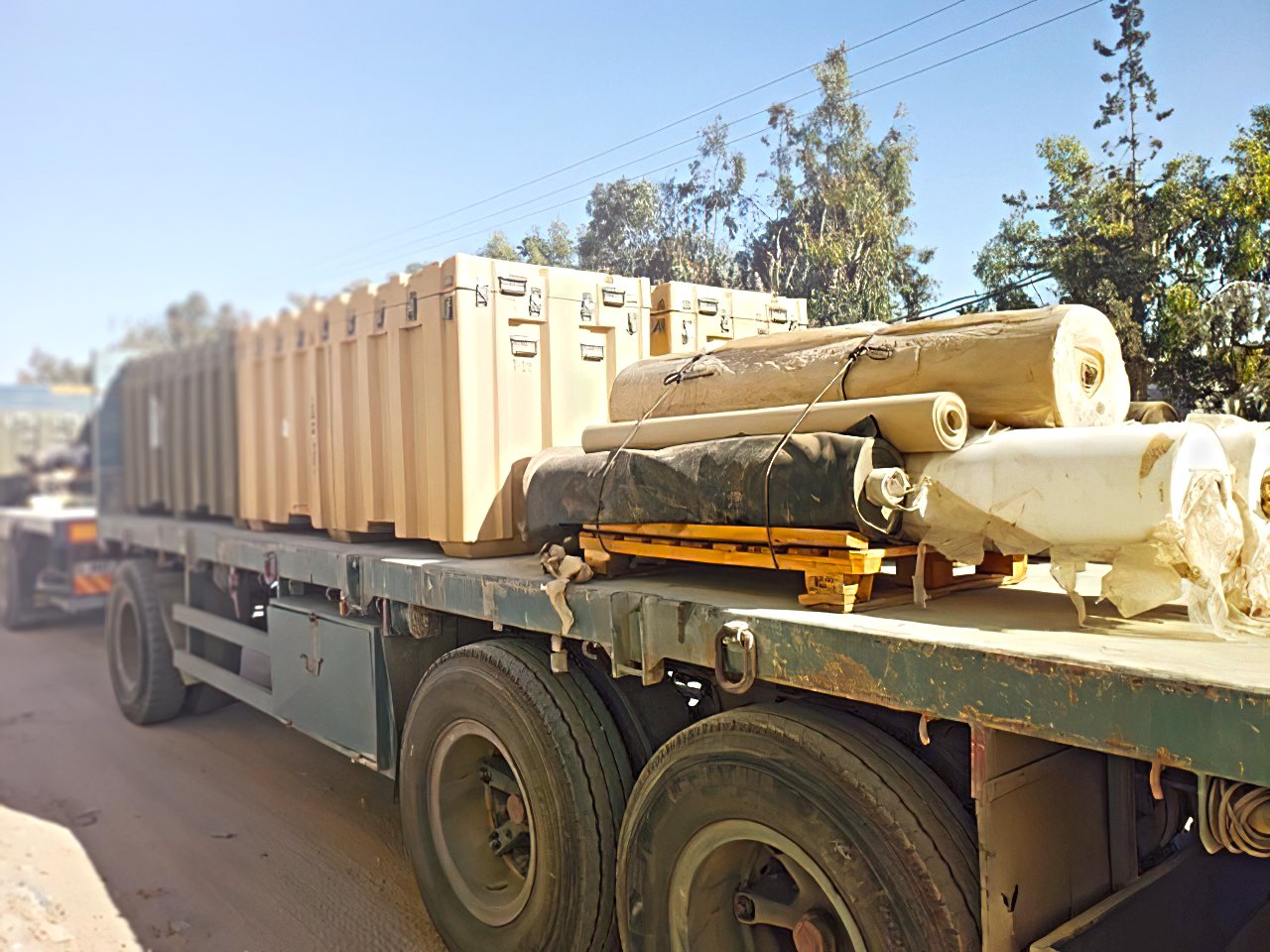
- Collecting material, tools, and other equipment
- Performing a quality assurance or quality control inspection
- Taking and documenting final inventories
Establishing a Work Zone
When establishing a work zone you will want to make certain that your space is not only safe for your employees, but for the general public as well. Consider constructing physical barricades to prevent entry or removing items from the work zone that might be harmful. Remember to install life safety systems during this stage.
Interface Confirmation
More often than not, a surveyor will have already conducted an assessment of the construction site before the installation team arrives. The surveyor will confirm that the interfaces are within tolerance. Your installation crew is then responsible for setting up the mechanical fasteners and adjusting their dimensions and elevation accordingly.
Establishing Support Structures
Most tension fabric structures require some sort of structural support system. Steel is typically the material specified, but there are other options as well. Regardless of material, the installation team is responsible for erecting the support structure and prepping for the addition of the fabric.
Installing the Architectural Fabric
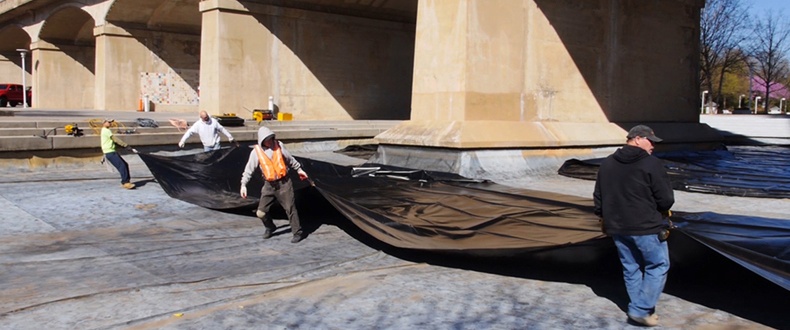
There are two techniques installers can use to install a tensioned membrane. Installers can choose to keep the membrane folded and then deploy the fabric over the structure in midair. The other installation method involves unfolding the membrane, while being mindful of anything that might puncture the product, and then hoisting it around the structure. The project’s application will dictate which installation procedure the installation team should use. After deployment, the fabric will need to be fastened and tensioned to the support structure.
Final Inspection
Before the client walkthrough is performed, the installation team will conduct a final quality assurance or quality control inspection. Cleaning and touch ups will also be performed at this time.
The above steps help ensure that fabric structure installations are successful time and time again. It is important to note that while these steps seem simple, they need to be performed by a team of experienced professionals. Building owners should look for installation teams that are able to provide a breadth of experience and knowledge as well as a portfolio of past projects.
Do you have any tips for successful fabric building installations? Share your thoughts with us in the comments!
The information in this article is based off of content from FabriTec Structures.