



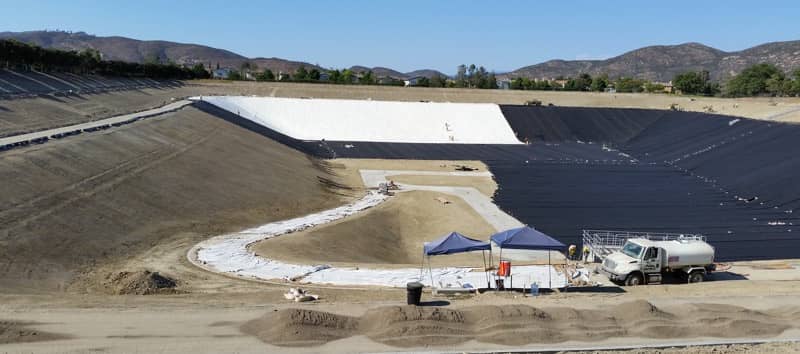
 Typically there are two types of geomembranes: flexible membrane liners and rigid geomembranes. With flexible geomembrane liners, large panels can be prefabricated in a factory prior to being delivered to a job site. Rigid membranes, on the other hand, need to be shipped to job sites before their geomembrane seams are joined together. So what difference does it make?
Geomembrane Seams or the “Weakest Link?”
A geomembrane is only as good as the quality of its installation, and seams play a big role. If your geomembrane seams are not joined properly, it could mean disaster for your project, especially if your application revolves around containing liquids like wastewater or hydrocarbons.
Field Seams
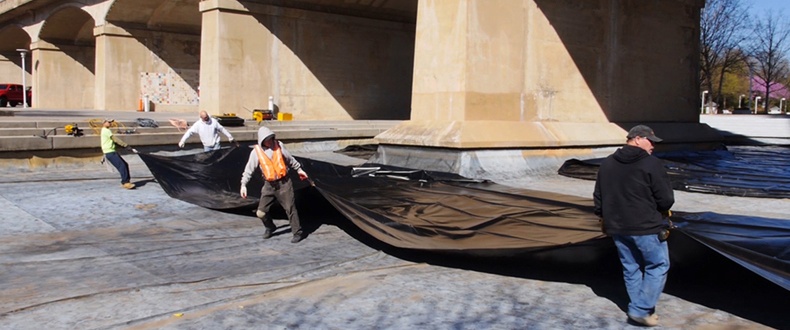
This type of seam proves to be a little bit more of a challenge during the installation process as there are many variables at play on a job site, including:
- Rain, wind, and dirt
- Welding equipment performance
- Temperature swings
- Installation team changes
Each of these variables can affect the integrity of your field seams and should be taken into consideration during the specification stage of your project.
Factory Seams
Factory seams, on the other hand, are joined under more favorable conditions; they’re typically done on a clean table or smooth concrete floor. Some benefits of factory seams include:
- Faster and more consistent welding
- Higher peel adhesion and bonded seam shear values
- Lower rate of destructive testing
- Fewer patches
- Lower CQA (construction quality assurance) costs
- Custom fit, which results in less detail work onsite
For some projects, flexible geomembrane liners can be large enough that field seams are not required.
Inspecting Your Seams
Regardless of seam type, testing must occur. Depending on the size of a project, prefabricated geomembrane liners can be inspected the same day, whereas projects with a number of field seams might need a second day of inspections—leading to increased costs. The Fabricated Geomembrane Institute (FGI) has developed some guidelines around testing seams.
Pre- & Post-Qualification Seam Testing
Trial seams need to be tested for both peel and shear strength. These seams need to be at least six feet in length and use the same equipment, operator, and conditions during production welding.
Production Seam Testing
The testing frequency must be once every shift change, or every four hours of production, whichever is more frequent. The same requirements as pre- and post-qualification seam testing also apply to production seam testing, the only difference being that it must occur during production.
Seams should be tested anytime there is a lapse in welding due to breaks or changes in equipment, etc.
Overall, factory seams prove to be more consistent due to the fact that they are joined in a controlled environment.