



 Principal and Materials Scientist/Engineer Dr. Ian D. Peggs has been working with polymers and composites in the field and laboratory for over 25 years, and in his “Geomembrane Liner Durability: Contributing Factors and the Status Quo” paper, he states that nothing is absolutely impermeable.What does this mean in regards to geomembranes used as barriers between contaminates and the groundwater? Geomembranes are low permeation barriers made from flexible sheets of polymeric compounds which allow liquids and gases to move through them.
Even rigid structures such as metal and concrete have some type of absorption property. Geomembranes do not all absorb and transmit fluids equally due to the polymeric structure of the geomembrane. For example, ethylene interpolymer alloy (EIA) geomembranes have a different resistance to specific fluids when compared to high-density polyethylene (HDPE), which has a different resistance than chlorosulfonated polyethylene (CSPE) and so on.
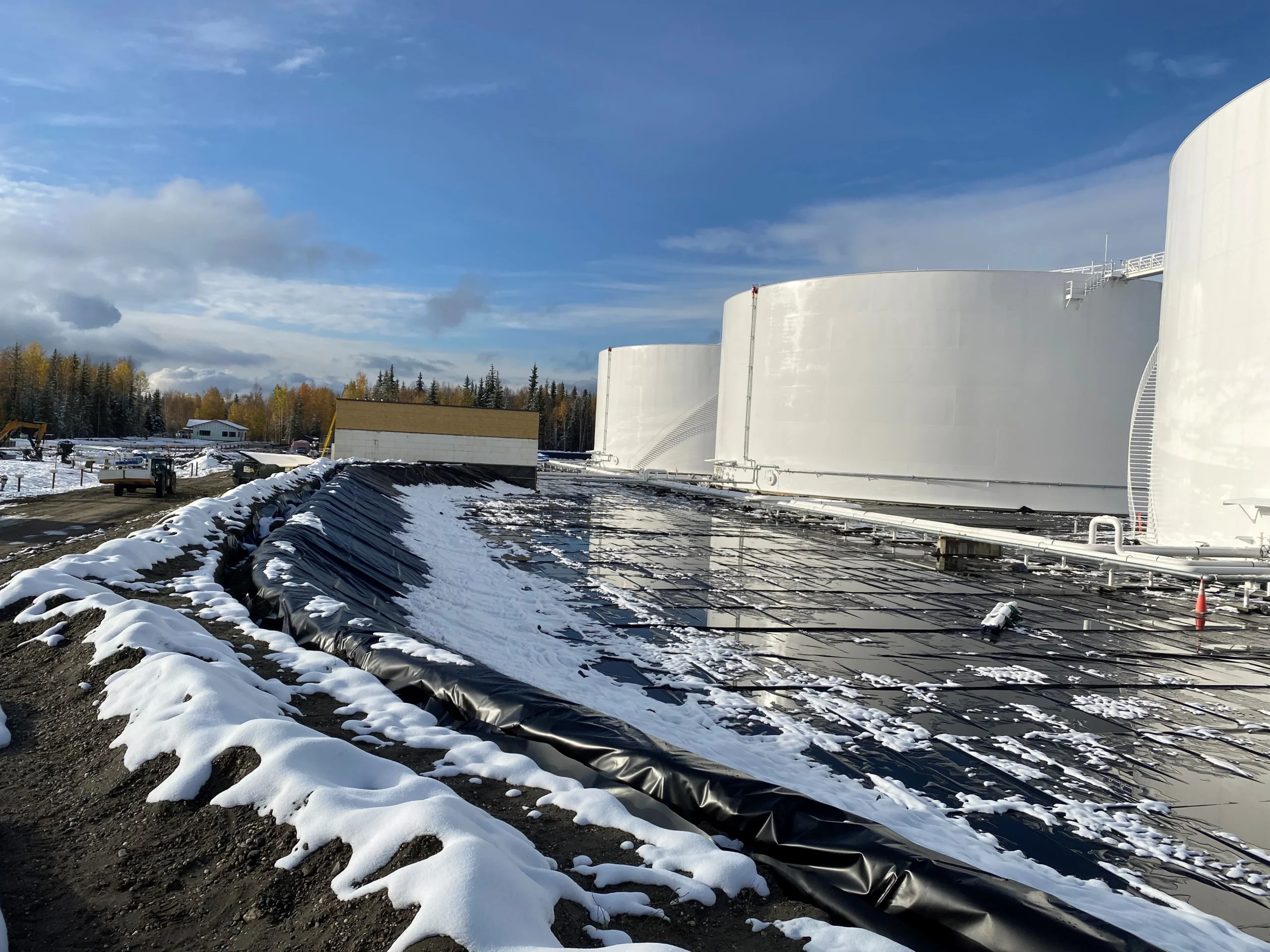
When considering options for primary and secondary containment, concrete is a common choice for several reasons, including its resistance to the elements such as UV rays, precipitation, and variations in temperature. However, impermeable geomembrane liners are a better option for secondary containment of spills because unlike concrete, secondary containment liners don’t leak, are less expensive, and don’t require costly subgrade consideration and amendment.
When looking strictly at permeability, engineers need to take into consideration what is being contained, the allowable permeation rate of the fluid through the geomembrane, and how it may affect the geomembrane. Permeation of the sheet itself is just one factor to consider in the overall application. Permeation can be influenced by other factors such as:
- Wrinkles (HDPE)
- Damage during installation
- Thinning of the membrane over protrusions
- Overall design of the containment area
-
- Operating temperature
- Secondary liner
- Concentration levelsOverall design of the containment area
- Life expectancy
Permeation of geomembranes can be tested by using 2 methods: ASTM D814 Test Method for Rubber Property–Vapor Transmission of Volatile Liquids or ASTM E96 Test Methods for Water Vapor Transmission of Materials.
ASTM D814 is recommended for applications where the fluid will be contact with the geomembrane, whereas ASTM E96 is best for fitted cover type applications that are containing vapors. The figures below show the distinct differences in the two tests.
 |
 |
| (liquid in contact with specimen) | (vapors in contact with specimen) |
Understanding the permeation requirements of the application and specifying the best geomembrane can be a challenge as different geomembranes have different failure mechanisms. It is recommended to look at the overall application, investigate the geomembrane permeation properties, the liner life expectancy and any other factors that will influence the application before making a selection. Interested in learning more about impermeable geomembrane liners? Please contact us.