



As Engineers, we use the term “failure” in a number of ways but know that it implies something did not perform as expected. Was it the fault of the “failed” thing or action, or was it a failure in how it was expected to perform, under those conditions? Regardless, we all know that failure brings negative connotations in many ways, and none are desirable.
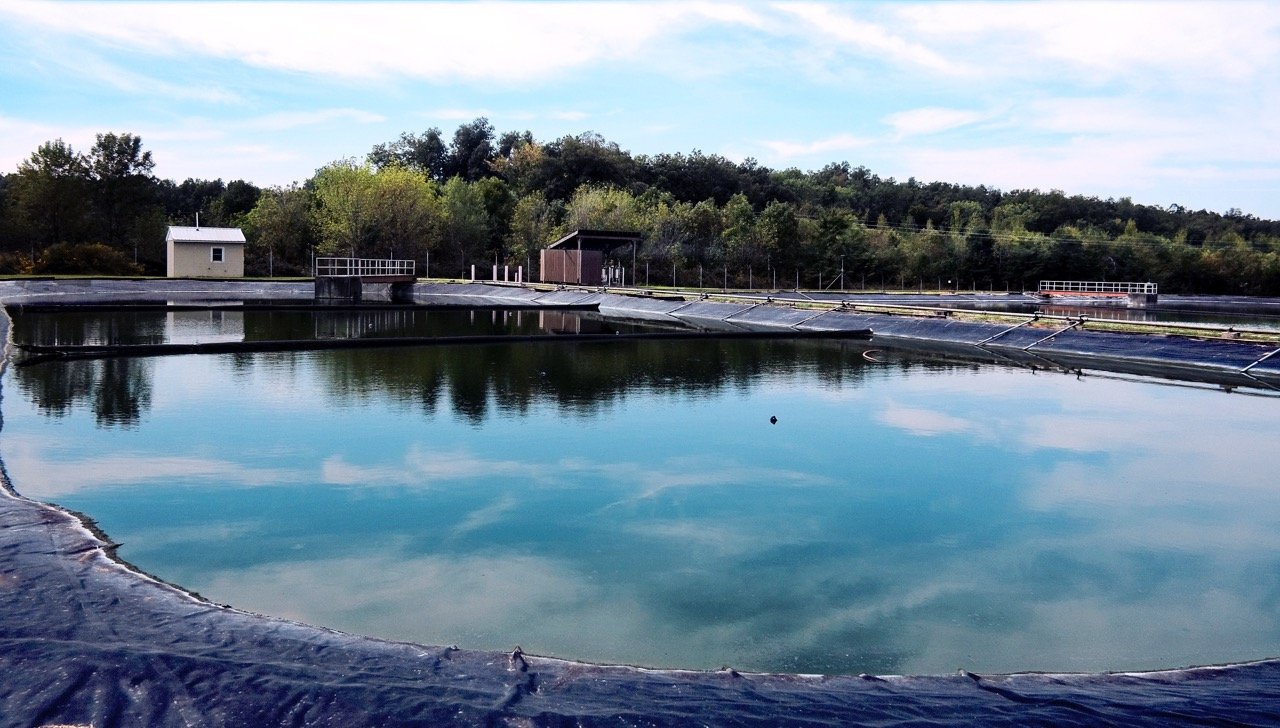
A recent case history was presented in the industry which was entitled, Failure of a geomembrane in an impoundment application. A geomembrane system had leaks, causing slope failure and other hydraulic problems with the subgrade. Contaminants were being released and were being detected at elevated levels in adjacent monitoring wells. The owner of the impoundment engaged knowledgeable industry experts to investigate the issue and determine the mode of “failure.”
In summary, here were the general details of the application and the conclusions of the investigations:
Site Characteristics –
- The maximum hydraulic head on the geomembrane was 12 ft (3.6 m). The contained liquid was brine with oil residue.
- Periodically, the impoundment was drained, and solids were removed with pressurized water and shovels.
- The subgrade was rocks, overlain by fines, overlain by a non-woven 10 oz/ yd2 (340 g/m2) geotextile.
- The geomembrane was an exposed unreinforced 40 mil (1.0 mm) LLDPE.
- Influent was via hoses and diffusers in the impoundment.
Investigation Conclusions –
- Geomembrane “defects” were caused by damage from unsecured influent hoses.
- Subgrade damage occurred and was due to leakage through geomembrane defects.
- Exposed rocks were present in the subgrade caused by erosion of the fines layer under the geomembrane.
- Many geomembrane punctures were present and primarily (>98%) upward, consistent with puncture from underlying rocks.
After field investigations and modeling by two different industry consultants, conclusions were presented which seem consistent with a non-reinforced film being punctured due to surface damage and inadequate subgrade preparation. One of the investigators concluded the geomembrane was damaged due to process activity on the top, specifically unsecured discharge hoses. While the analyses were thorough, it seemed to be a straightforward problem and solution. The chosen geomembrane did not have adequate physical strength to perform as needed in the application. It is especially noted that the geomembrane used in the application is not considered to have robust puncture resistance. The table below compares it to other products in the marketplace.
| Geomembrane Type | Puncture Resistance – ASTM D48331 |
| LLDPE 40 mil (1.0 mm) Film (product used at site) | 44 – 56 lbf (0.19-0.25 kN), (min. avg. or not stated)1 |
| HDPE 40 mil (1.0 mm) Film | 67 – 78 lbf (0.29-0.34 kN), (min. avg.)1 |
| HDPE 80 mil (2.0 mm) Film | 125 – 160 lbf (0.55-0.70 kN), (min. avg)1 |
| XR-5 Ethylene Copolymer 30 mil (0.75 mm) and 40 mil (1.0 mm) Reinforced | 275 lbf (1.21 kN), (min.)2 |
1All data is sourced from manufacturers’ literature as published in the Geosynthetics Specifiers Guide 2023, GM 13 and GM17.
2Data sourced from manufacturer’s literature.
It is quickly obvious that the product used in the installation has one of the lowest resistances to puncture, and other physical properties, of any competitive product.
The following recommendations were presented.
Recommendations –
- Keep hoses off geomembrane and/or better anchor to prevent movement.
- Provide better subgrade preparation.
- Provide protective cover over geomembrane.
- Remove solids without pressure washing and shovels.
While there is no follow-up information on the ultimate solution for this site, it likely required taking the impoundment offline, removing the damaged geomembrane, remediating the contaminated soil and groundwater, repairing, and reworking the subgrade, anchoring the influent hoses, and installing a new geomembrane.
Was this a geomembrane failure, was it defective, or was it not suited for the application? There was no mention of the geomembrane not meeting its specifications. This represents a situation where the geomembrane did not fail, but rather the selection of this product for this application was incorrect and performance expectations exceeded its properties. The subgrade design and the influent discharge mechanisms certainly needed improvements, but a more robust geomembrane would have incurred less damage (at worst) and possibly been repairable in situ. Should that have been an additional recommendation, or alternative?
“Failure” should be considered to describe inadequate performance when service requirements meet stated product ability. Make sure the geomembranes you select are capable of the conditions to be encountered, with room for error.