



Since posting our first blog addressing the recent interest in exposed Geomembrane covers, discussion around the topic has continued throughout the industry. More specifically, the conversation often revolves around the same question: How can certain geomembranes be made to work for exposed applications?
Consider landfill closure caps, for example. Currently, there is virtually no mention of broader industry experience but rather only the limited experience to date with landfill closure caps.
But what about exposed applications that have always been left uncovered?
Consideration of the long-term experience with floating covers, evaporation ponds, secondary fuel containment, impoundment slopes and other related applications has been omitted. Surely there is plenty to be learned from those multiyear experiences.
In this blog, we’ll explore what more there is to know about geomembrane covers and their properties, especially when considering their use in exposed geomembrane applications.
A look at laboratory testing
Several laboratory analyses, some with limited independent field analysis, have focused on geomembrane failure in exposed environments. One such analysis notes that high density polyethylene (HDPE) has ultimately failed due to chemical degradation. This is largely due to oxidative degradation by exposure to ultraviolet (UV) radiation (photo-oxidation) and thermal oxidation, two mechanisms that likely apply to most geomembrane polymers.
This testing places emphasis on the ageing of exposed geomembranes, primarily polyethylene compounds. Laboratory results show a high positive correlation to a theoretical length of service, based on 50% loss of the exposed geomembranes’ mechanical properties. ASTM G151-2019, a standard practice for exposing nonmetallic materials in accelerated test devices using light sources, also lists numerous reasons to avoid using laboratory data for lifetime projections, including testing conditions among others. On the other hand, the XR-5 Geomembrane, a reinforced ethylene copolymer, has proven successful in many exposed projects that have been in service for nearly 40 years.
Survivability is key
Many geomembrane manufacturers recommend burying their products regardless of whether the application is exposed. UV exposure is certainly one reason, due to the degradation effects the light has on some geomembranes after only a few short years. But the bigger issue with exposure is lack of survivability when it comes to the mechanical properties (think puncture, yield tensile and seam strength) and high thermal expansion-contraction rates.
In general, manufacturers recommend exposed service for these geomembrane applications, and while all materials are subject to degradation via UV exposure and weathering, it is widely accepted that UV light and weathering are seldom the ultimate cause of failure. Rather, failure is usually due to lack of survivability and self-destruction from thermally induced movement.
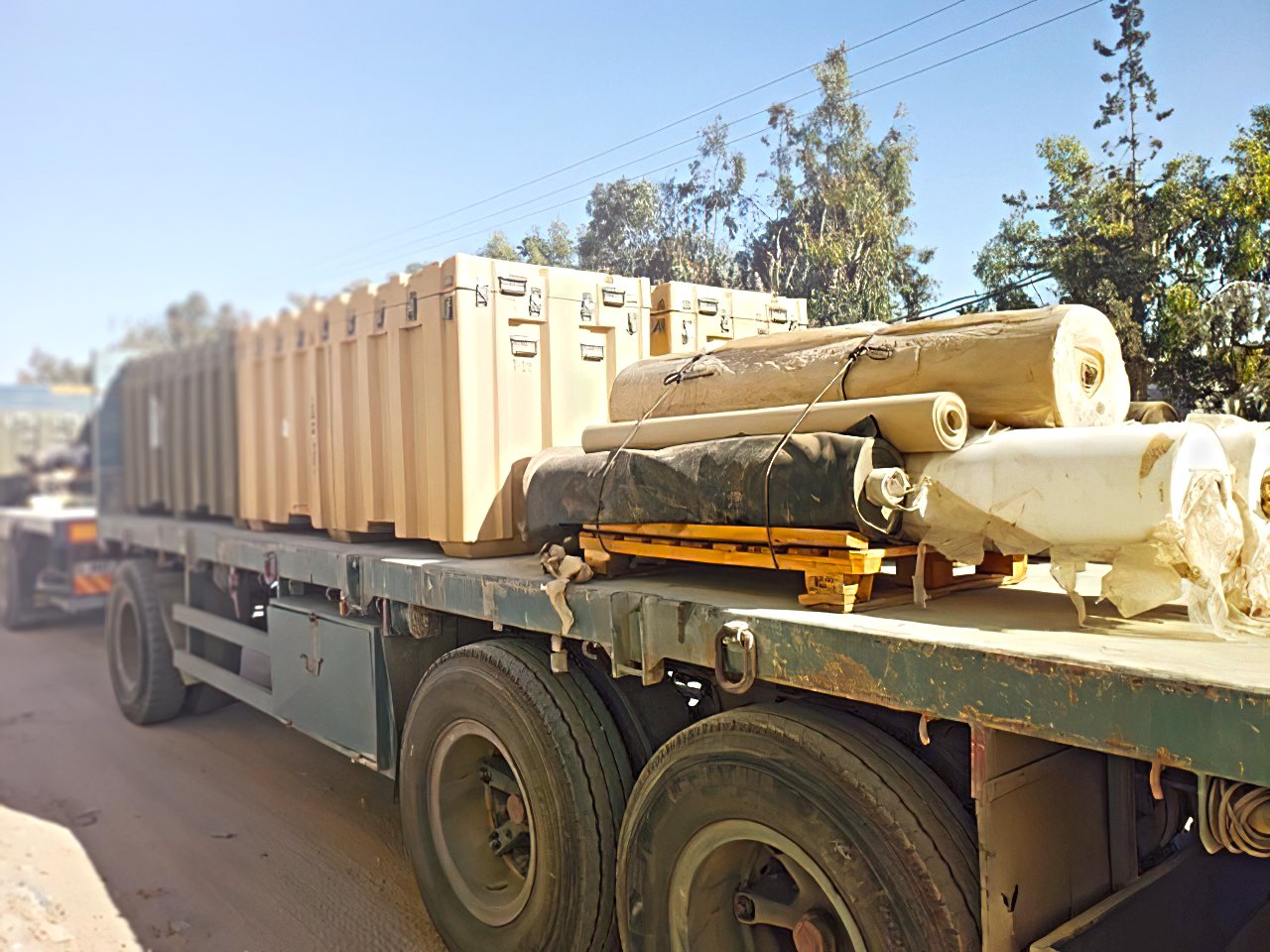
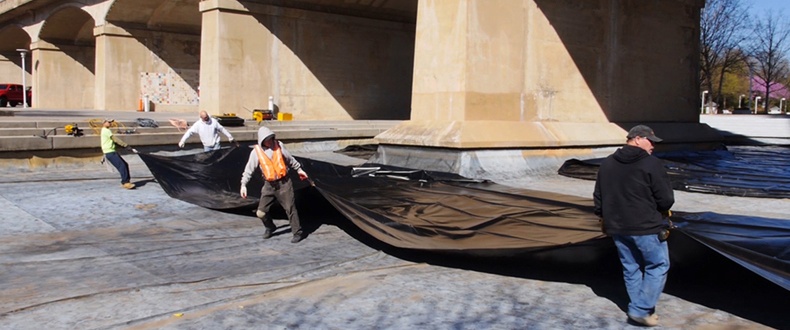
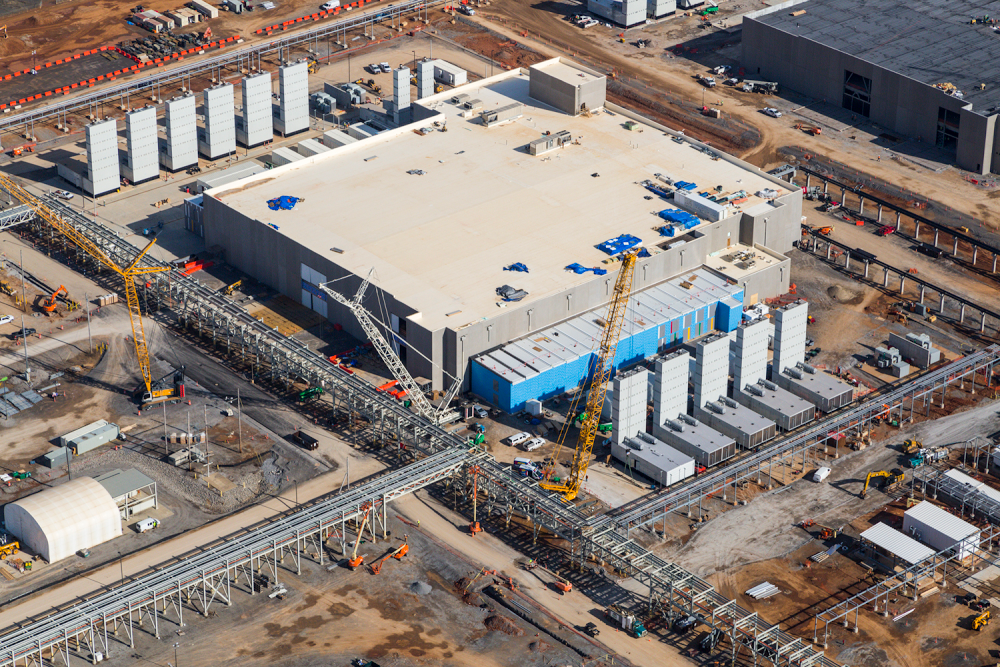
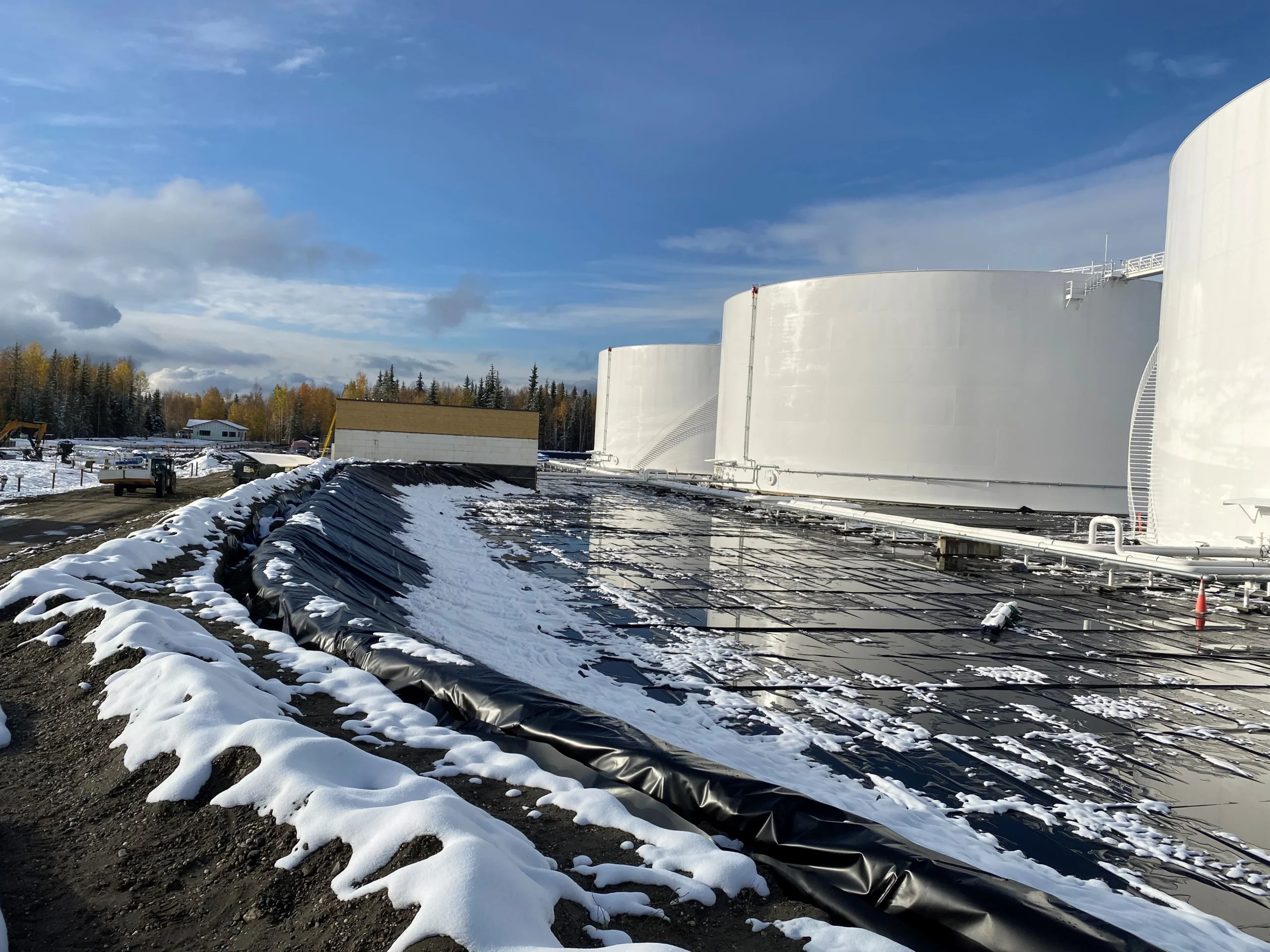
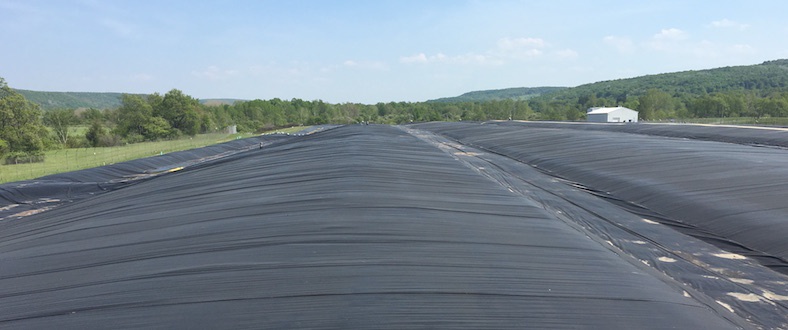
Pictured below are several examples of exposed geomembranes in long-term service conditions.
 Exposed Geomembrane Landfill Cover
West Valley, NY, USA
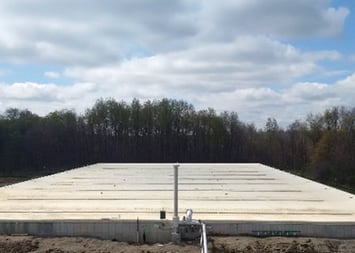 Exposed Geomembrane Floating Cover
Middlefield, OH, USA
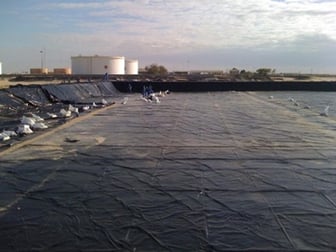 Exposed Geomembrane Evaporation Pond Liner
Ras Lanuf, Libya
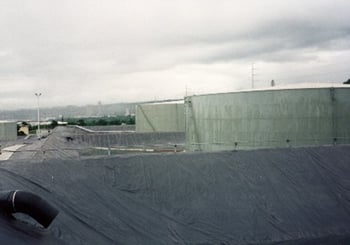 Exposed Geomembrane Secondary Fuel
Containment Liner
Honolulu, HI, USA
So, when it comes to the many geomembrane properties to consider for use in a variety of exposed applications, what matters most?
The top properties to consider when selecting an exposed geomembrane, include:
1. UV: The ability of an exposed geomembrane to withstand degradation from UV light is certainly an important and assumed property.
2. Puncture resistance: Resistance to puncture under stress betters the geomembrane’s rate of survivability.
3. Yield tensile strength: Necessary to preventing the geomembrane from creeping down slope and ensuring overall survivability.
4. Seam strength: Ideally this will be equal to the parent material. Many geomembranes do not publish seam strengths in their specifications, usually because they are less than the parent material. Under constant loading and under elevated temperatures, dead load seam strength is another important property to consider.
5. Weight/density: Light materials with low specific gravity are more subject to wind induced movement.
6. Coefficient of thermal expansion-contraction: Polymers with high coefficient of thermal expansion-contraction rates are more prone to cracking, making it more difficult to maintain the integrity of the terminations, including seams.
7. Flexibility: Flexible geomembranes are more easily and reliably fixed at anchor points which are subject to bending and flexing.
While the term “Exposed Geomembrane Cover,” or EGC, is being promoted as new technology, it is not. With proper research, you are sure to find many proven examples of geomembranes currently being utilized long term for exposed applications.
For more information on the XR series of geomembranes, go to: XR Geomembranes.
All photos are XR-5 geomembrane, from Seaman Corporation.