




What are the key issues in writing “or-equal” geomembrane specifications?
Part 1. How are “or-equal” specs used in the construction industry?
Construction specifications that name a specific item (a product or service) by brand or exclusive name are often considered undesirable. Some assume it allows the supplier of that item to increase cost beyond what is reasonable or what has been estimated during the design process. The concern is more prevalent with public construction projects and, to a lesser extent, private projects. Many specifiers alleviate some of the concern, by inserting “or-equal” or “engineer-approved equal” into specifications, which could possibly transfer or postpone the burden of determination of acceptability into the design.
A construction spec can take three forms:
- Prescriptive – Focuses on the details for the types of materials used and installation of said materials; also known as materials and methods specs, or recipe specs.
- Performance – Discusses the operational requirements of a project and expects the contractor to determine how to meet the performance requirements.
- Proprietary – Used when a portion of a project is dependent upon the performance of a specific item; may use a brand name.
 Source: Federal Highway Administration
Some sources include a fourth type, Standard References, which describe open specs from standard-setting organizations.
It is quite common to encounter geomembrane specifications that are a combination of several or all these types. For instance, an open proprietary specification would use the properties and performance of a specific product as a standard or benchmark and allow “or-equals” to that standard, which is also quite common.
What about or-equal? What constitutes or-equal? Consider:
- Ingredients vs. outcomes, physicals vs. performance. On one hand, should we only evaluate outcomes or performance on an or-equal determination? Lacking in that argument are the inherent properties, content or features that yield the desired outcome and ancillary performance, such as longevity. Remember, understand the source of the equation, don’t just memorize it.
- What if only a couple of spec items are not met by an or-equal? Piggybacking on No. 1 above, you need to evaluate the reason and impact for needing a certain property.
- Is it unprofessional to write a proprietary or open proprietary spec? – ASCE’s 2020 revision of the Society’s Code of Ethics removed previous restrictions on product endorsements, within the confines of proper engineering judgement.
- How much of the spec are actual minimum/maximum specifications and how much is based on substantiated or unsubstantiated data, or nominals, for that matter?
- Does the open proprietary specification describe a system that depends on an item (s)? In the case of geomembranes, when evaluating or-equals, the reviewer needs to consider how the system may need to be changed to accommodate changing an item (more on this subject in Post no. 2.)
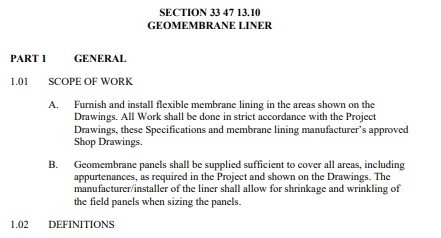
Geomembrane Specifications.
Source: CH2M Hill (now Jacobs)
It seems many in the construction industry default to all specs being open to or-equals whether stated or not.
In Post 2, we’ll explore a construction project where problems resulted from the approval of an or-equal, and the outcome.
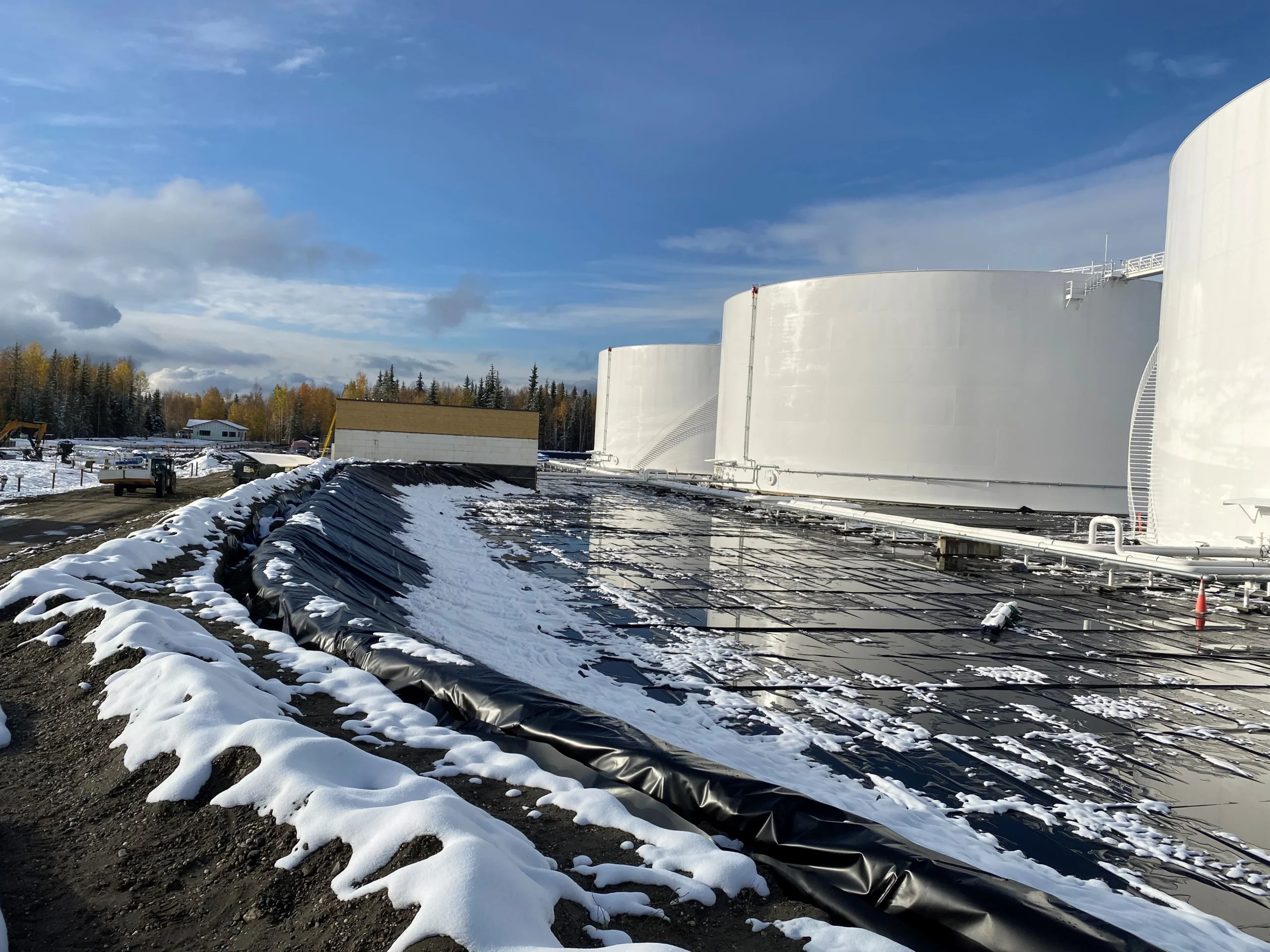
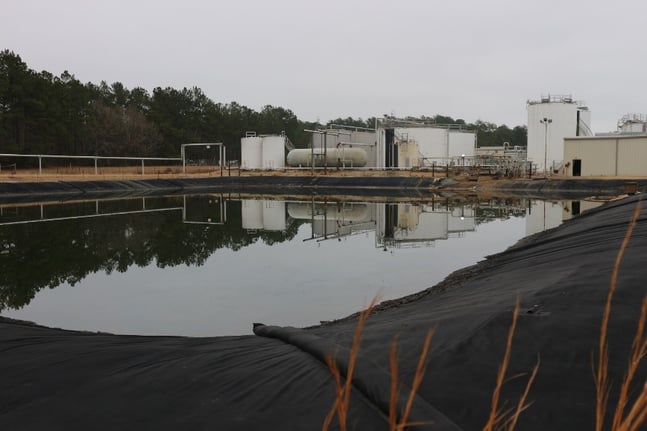 XR-5 Geomembrane at a CO2 facility, Mississippi, USA
Installed 1986, photo date January 2019
Source: Seaman Corporation