



Wastewater Series: How Geomembranes help to improve Water quality, lower costs and increase efficiencies in wastewater treatment
Part 3: Geomembrane Applications in Wastewater Collection and Equalization, and Primary Treatment
“Old ideas are being evaluated and new concepts are being formulated.” – George Tchobanoglous, University of California Davis, in Wastewater Engineering: Treatment, Disposal and Reuse, 3rd Edition.
In this post and the next, Geomembrane use in wastewater management will be discussed. The wastewater management system will be broken into two parts: Wastewater Collection and Equalization, and Primary Treatment (this post) and then Secondary/Tertiary treatment and Residuals management (next post).
Wastewater Collection and Equalization. A wastewater, or sewage, collection system consists of underground pipes and intermediate pumping stations which transport sewage from the point of generation to the WRRF. As discussed in Post 2 of this series, extraneous water entering and overloading the collection system and treatment works is a major problem. Historically, resulting overflows (now designated Sanitary Sewer Overflows, SSOs) were simply discharged to surface waters untreated. Now, however, this excess water is not allowed to be discharged untreated. The answer is either larger capacity of collection and treatment, or overflow storage. Many municipalities use geomembrane lined impoundments for storage of SSOs and flow equalization. Two cities’ experience with XR-5 geomembrane lined SSO impoundments can be found here: Haikey Creek and Mobile, Alabama.
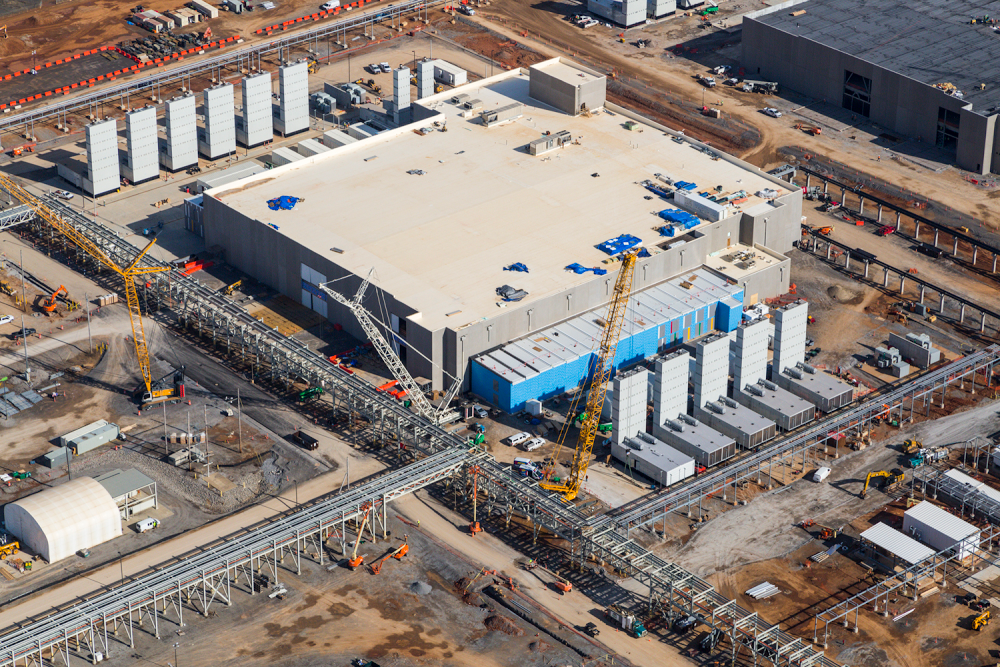
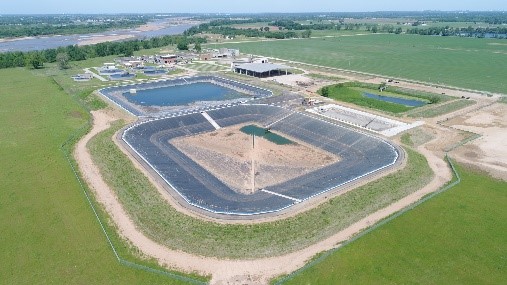 Haikey Creek WWTP
Tulsa, OK USA
Source: Seaman Corporation
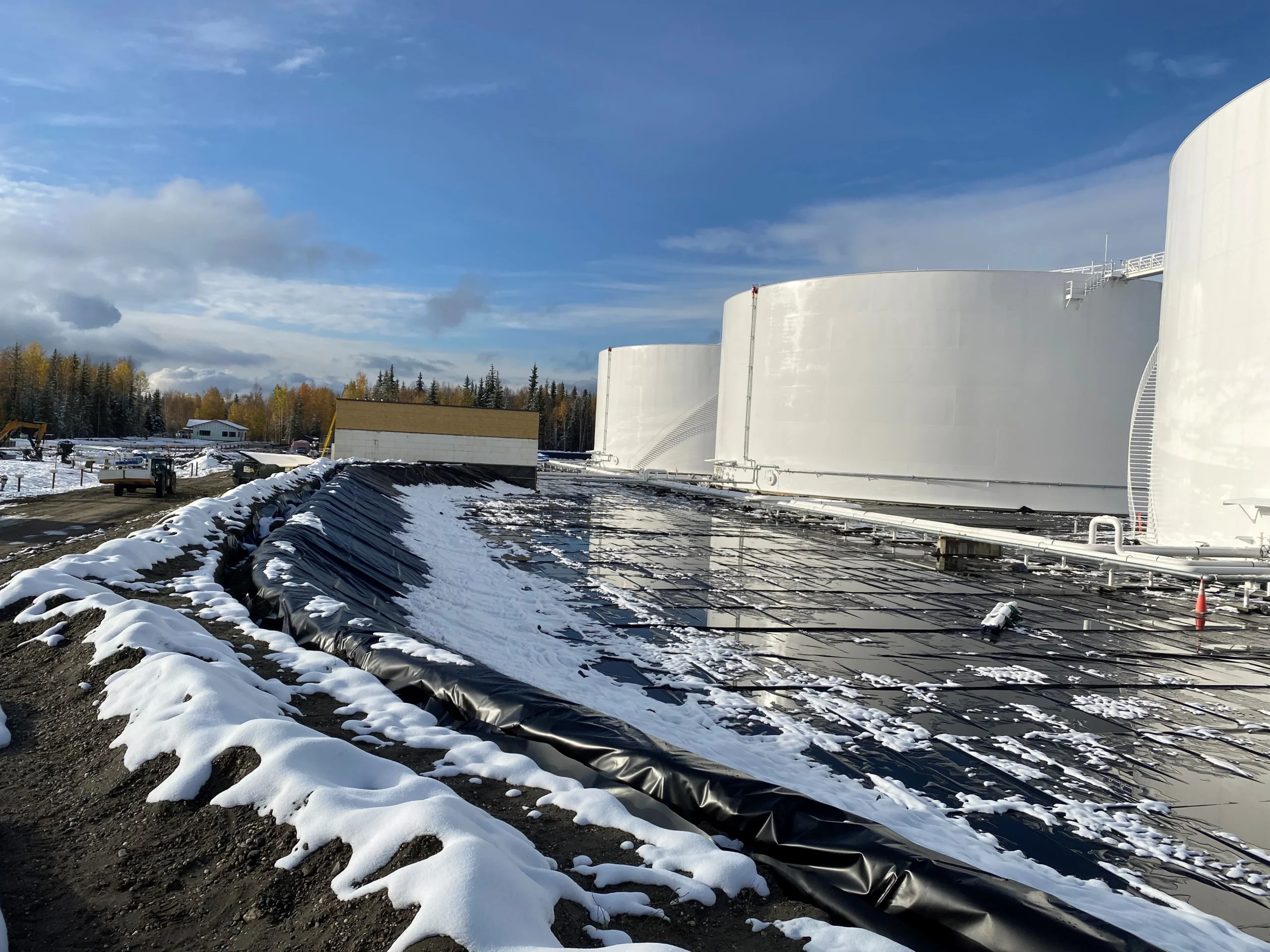
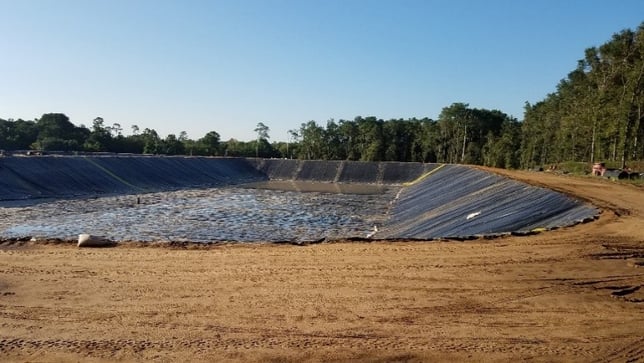 Halls Mill Creek Lift Station SSO Impoundments.
Mobile, AL USA
Source: Seaman Corporation
Hard shell tanks are also used for this overflow storage, but as detailed in the Haikey Creek case study, the unit cost is much higher than geomembrane lined impoundments. This assumes of course that adequate land is available. Geomembranes are also used to line these hard-shell storage tanks, providing protection against corrosion.
These are temporary holding impoundments. They remain empty except in wet weather overflow events. For that reason, there are several criteria for the geomembrane liner:
- Low Thermal Expansion Contraction so that no cover is required.
- High strength to withstand cleaning with water cannons or hoses.
- High UV resistance
- Seam Strength equal to or greater than parent material strength for exposed slopes.
Primary Treatment. Most initial processes in wastewater treatment are designed to remove trash and large solids which are easily separated due to their size or density. These are physical removal processes that generate “screenings,” typically landfilled without further treatment. In the case of primary clarification, a high-water content sludge is generated and may be sent to an anaerobic digestor where it can be combined with secondary clarification sludge. Geomembrane floating covers are often used in these digestion processes. High yield strength, methane resistant materials such as the XR-5 geomembrane are often used for anaerobic digestor floating covers.
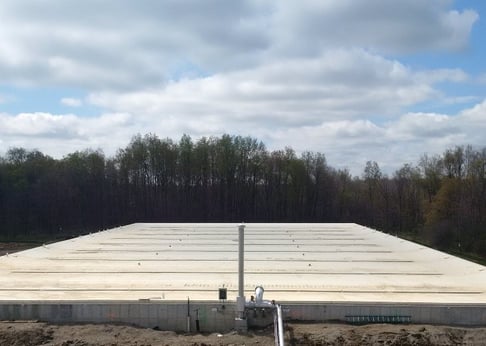 Wastewater Treatment plant with XR-5 lined and covered Anaerobic impoundment
Source: Seaman Corp
For some high organic strength wastewaters, anaerobic digestion is employed for the entire waste stream, following debris removal. An example is the city of Tulare, CA which has a very high dairy waste content in the municipal wastewater influent. Anaerobic digestion takes place in XR-5 geomembrane covered digestors, also lined with the XR-5. This process precedes aerobic secondary treatment.
Odor Control in wastewater treatment plants is an ongoing challenge. Various operations within the treatment process can be covered with geomembranes in a fixed, over tank, configuration to capture odors for treatment. These cover systems are often retractable to allow access into the covered tank. For this application, the geomembrane is under tension, which gives it strength to withstand wind and precipitation. Therefore, the geomembrane must have high yield tensile strength and low elongation. The seams must withstand constant loading at elevated temperature which also requires seam strength at ambient temperature equal to or exceeding parent material strength. The XR-5 geomembrane is the material of choice in this application.
In Part 4 of this series, Geomembrane use in Secondary/Tertiary treatment and Residuals Management will be discussed.