



 Reinforced geomembranes can be specified in a variety of scenarios, from floating covers to secondary containment liners. Highlighted below are three of the most common reinforced geomembrane applications.
1. Floating Covers
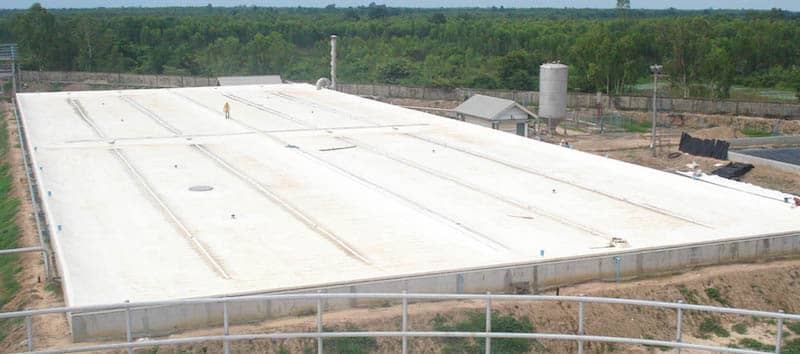
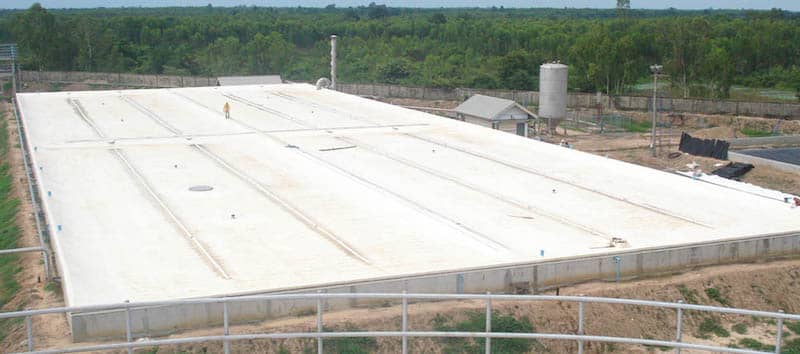
In floating cover applications, reinforced geomembranes are laid on the surface of a pond. A buoyancy system is created by ethyl foam tubes, wrapped by the geomembrane allowing the cover to stay afloat. Due to these ethyl foam tubes, the reinforced geomembrane liner has the ability to rise and fall in accordance to the level of contained liquid.
A few main reasons reinforced geomembranes are often specified for floating cover applications are due to the fact that they tend to possess low thermal expansion properties, high inherit physical properties, and low permeation rate. Below are some attractive floating cover applications:
- Methane collection for anaerobic digesters
- Preventing algae growth
- Preventing contaminants from entering the pond
- Preventing chemicals from being exposed to the air
- Odor control
- Animal control
2. Pond, Lagoon, and Reservoir Liners
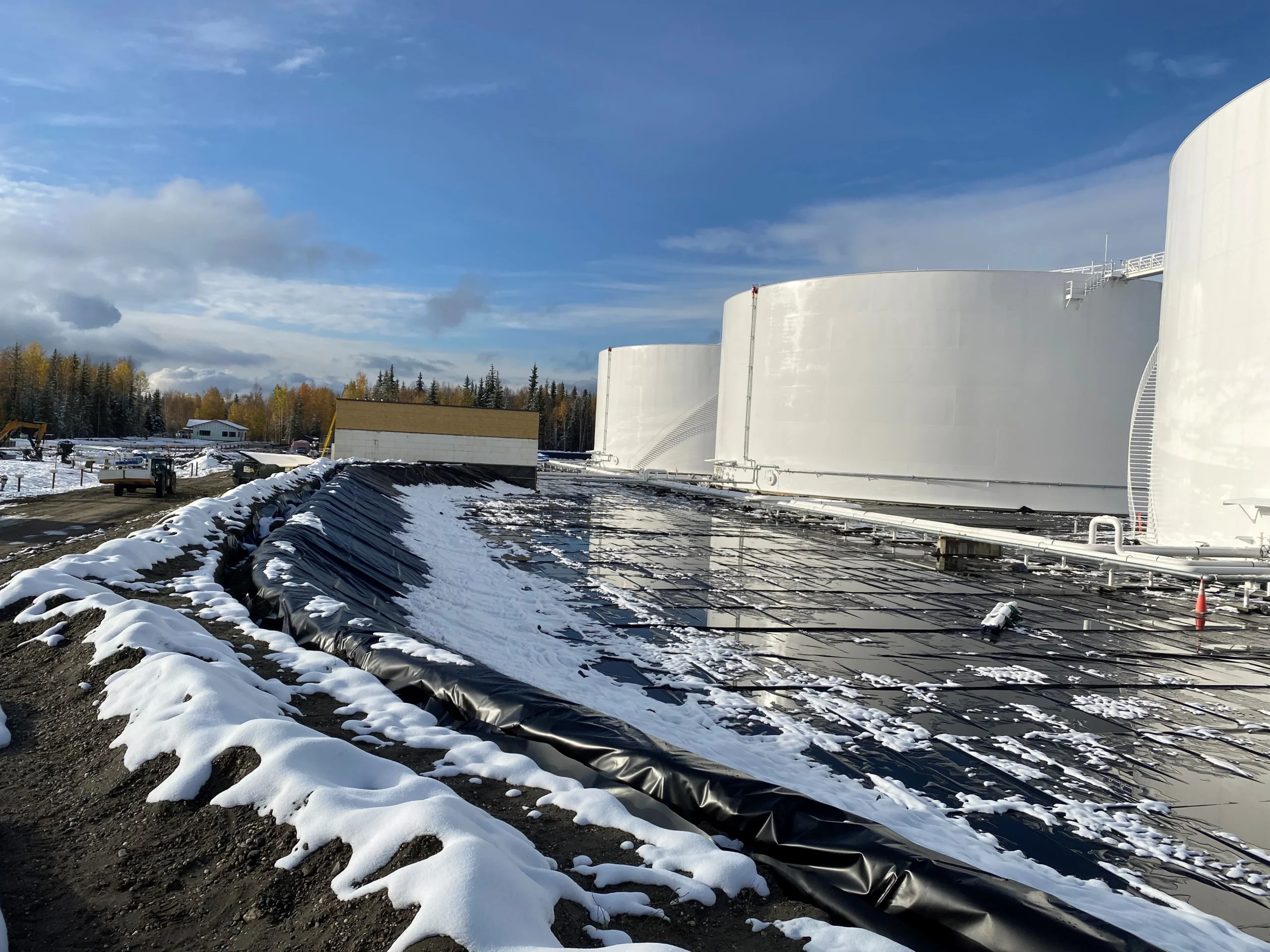
When a pond, lagoon, or reservoir is lined, the goal is to achieve an impermeable containment system. This liner system will prevent hazardous liquid from contaminating and coming in contact with the soil’s water table. If the water table were to become contaminated, it would potentially bring harm to the wildlife and people who drink the surrounding ground water.
Over the years, reinforced geomembrane liners have continued to be competitive in the liner market. One of the reasons for the continued popularity is due to the extra physical properties reinforced geomembranes provide with a lower mil/mm thickness. Though the strength of a reinforced geomembrane does vary by brand, be sure to fully inspect the physical capabilities before selecting your reinforced liner.
3. Baffles Systems
Baffle systems are used to restrain the flow of a fluid, gas, or loose material. In the case of water and wastewater treatment facilities, baffle systems are used for the following reasons:
- Increase chlorine contact time
- Settling and hydraulic detention time
- Increase the overall capacity of the facility
A baffle system is comprised of reinforced geomembrane curtains, draping down to the bottom of the pond (or tank) from floating polyfoam tubes wrapped in the same material. The geomembrane acts like a barrier, preventing short-circuiting and diverts liquid for a longer time in a pond.
Many reinforced geomembranes have been approved by the National Sanitation Foundation and American National Standards Institute for potable water and raw water contact (known as NSF/ANSI Standard 61 or NSF 61). As a result, all three of the applications mentioned above have the opportunity for potable water contact, if approved.