




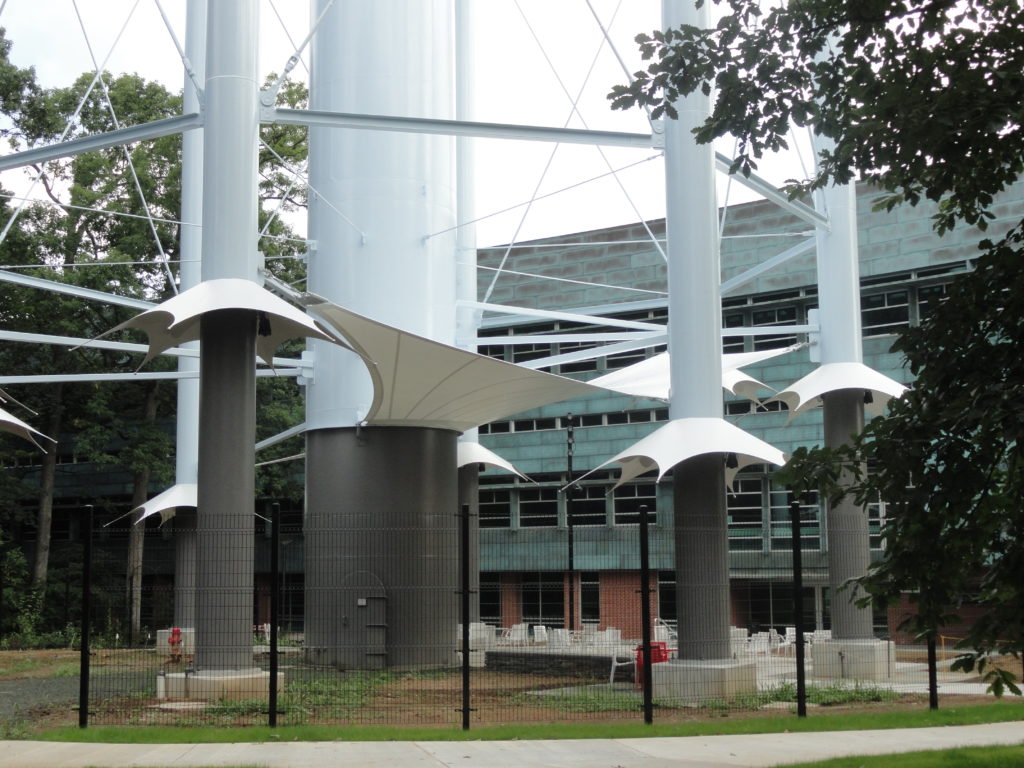
One of the many parts of the $61.6 million renovation and improvements to the water system on Penn State University’s main campus in State College, Pennsylvania, included replacing a large water tower. The 140-foot tower, which supplies water to the campus’s dorms and other buildings, is part of a system that uses over 550 million gallons per year. Construction of the new water tower on the northern section of campus began in 2015 and finished in the summer of 2017, and it included the addition of a unique shade structure built from tensioned architectural fabric.
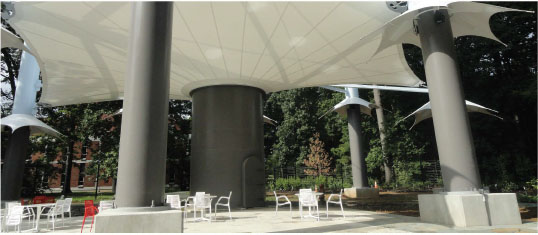
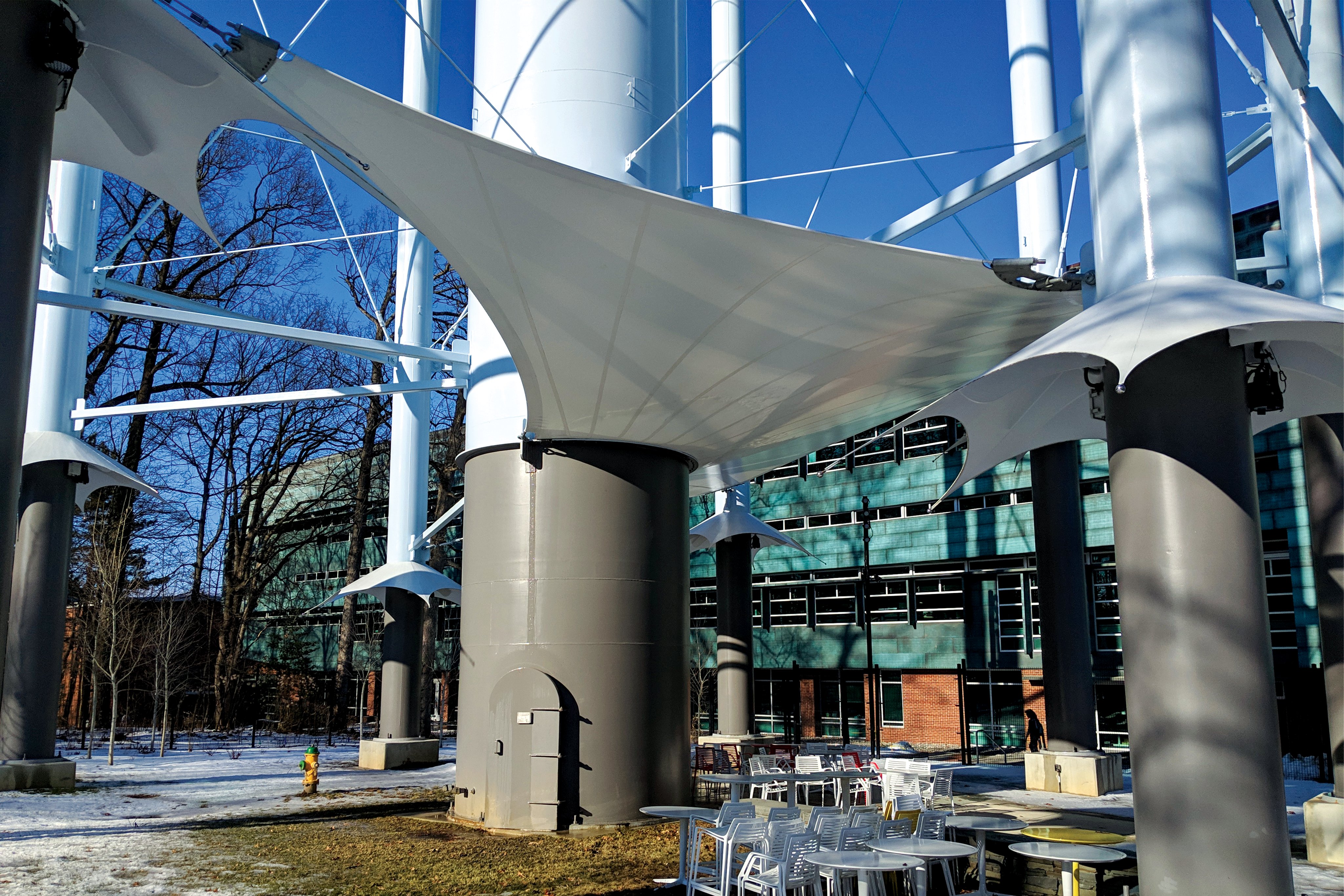
Just steps from the Palmer Museum of Art and adjacent to the Stuckeman Family Building, the new water tower includes a seating and stage area covered by a PVC-coated polyester membrane finished with a cross-linked PVDF topcoat. The initial design of the tensile structure was a combined effort between Derek Kalp, PLA, ASLA, Landscape Architect at the Penn State Physical Plant, and students at the Stuckeman School of Architecture and Landscape Architecture, of which Kalp is an alumnus.
“Because the tower itself is so large, we wanted to create a canopy to stop the eye,” said Kalp. “The climbing baffles on the legs and web-like canopies work in concert to distinguish the canopy from the rest of the tower. Additionally, the location of the water tower drove the desire to create a common space that reflected the natural surroundings. The unique shape of the canopies is reminiscent of a spider plant. The legs were painted brown to emulate the nearby tree trunks, while the tower itself is a light blue to match the sky.”
In addition to the distinctive aesthetic the canopies brought to the project, the tensile structures serve as a shelter to protect students and staff from the tower’s condensation. Kalp noted, “Water from the tower is around 52°F and condensation will inevitably form and trickle down the tower. The canopies allow the space under the tower to be usable almost year-round, as the fabric is durable enough to withstand not only the dripping condensation, but also rain and snow.”