Skip to content
logo
Commercial & Public Spaces Data Centers Food & Beverage Government & Emergency Response Manufacturing Power, Oil, & Gas Sports & Leisure Transportation & Infrastructure Water & Wastewater Management
feature image

Commercial Roofing

logo-fibertite
Geomembranes

Geomembranes

logo-xr
Architectural Fabrics

Architectural Fabrics

logo-architectural
Keder samples fabricated by Lightweight Structures

Tensioned Fabric Solutions

Lightweight Structures
Innovative Fabric Solutions

Industrial Fabrics

logo

About Seaman Corporation

Seaman Corporation is a privately held, multi-generational family-owned U.S. manufacturer and trusted provider of protective solutions, delivering high-performance industrial coated fabrics since 1949.

Read More
Corporate Responsibility Our Impact Our History Leadership and Governance Careers

Our Insights

Explore Our Insights
Case Studies Competitive Comparisons Blogs Press Room Webinars

Contact Seaman
Corporation

800-927-8578 Send A Message Now

Locations

World Headquarters

Seaman Corporation
1000 Venture Boulevard
Wooster, Ohio 44691

330-262-1111 330-263-6950

Bristol, Tennessee

Seaman Corporation
PO Box 3946
225 N. Industrial Drive
Bristol, TN 37620

423-989-5200 423-989-5215

Whitehall, Pennsylvania

Lightweight Structures
1139 Sumner Avenue, STE 1
Whitehall, PA 18052

610-435-4720 610-465-8866

More ways to Connect

Careers
Credit Application
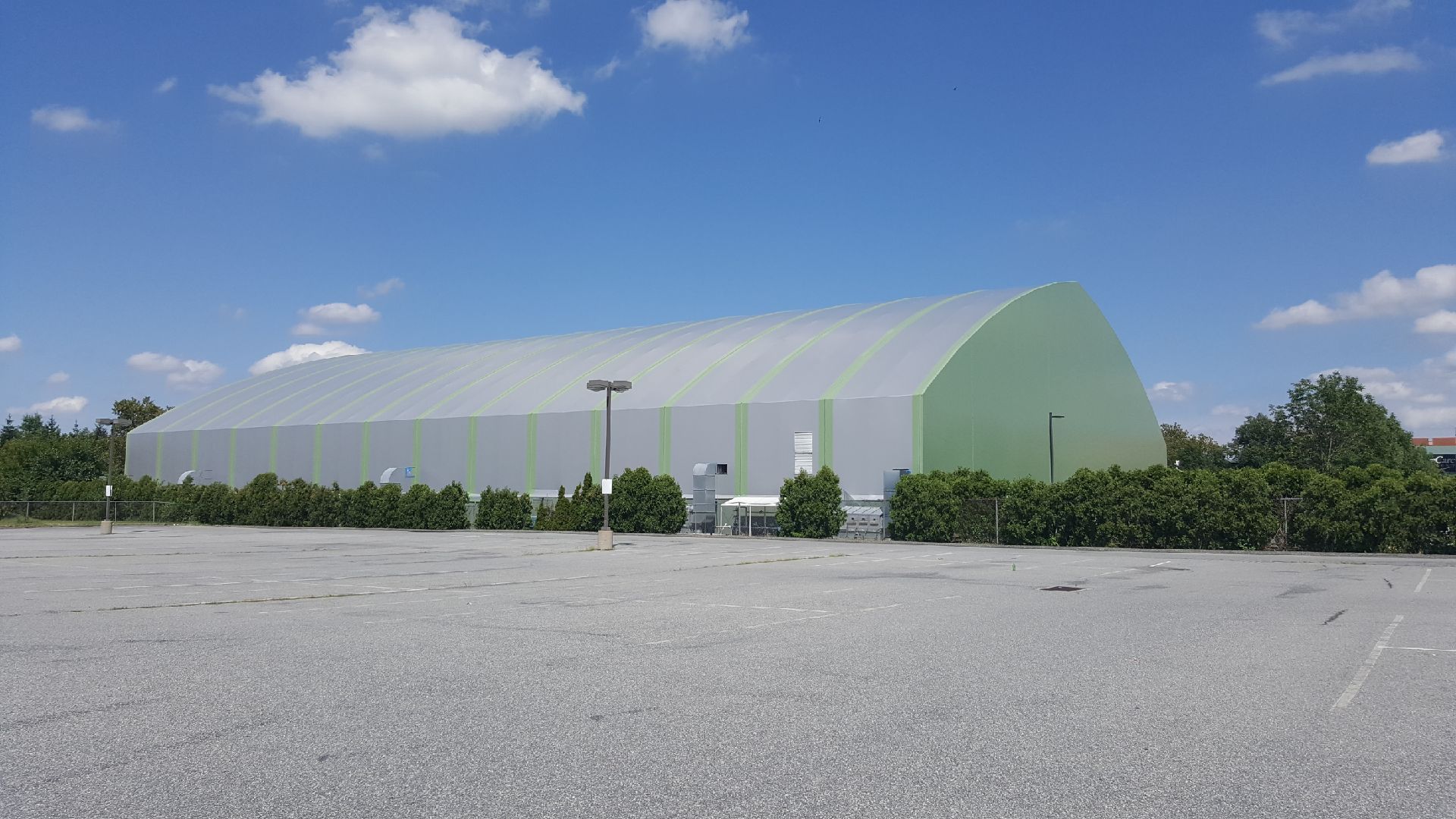
Keder panels on the reskinned roof of a frame-supported practice facility
Blogs

5-Step Turnkey Reskin Overview

1. The client request

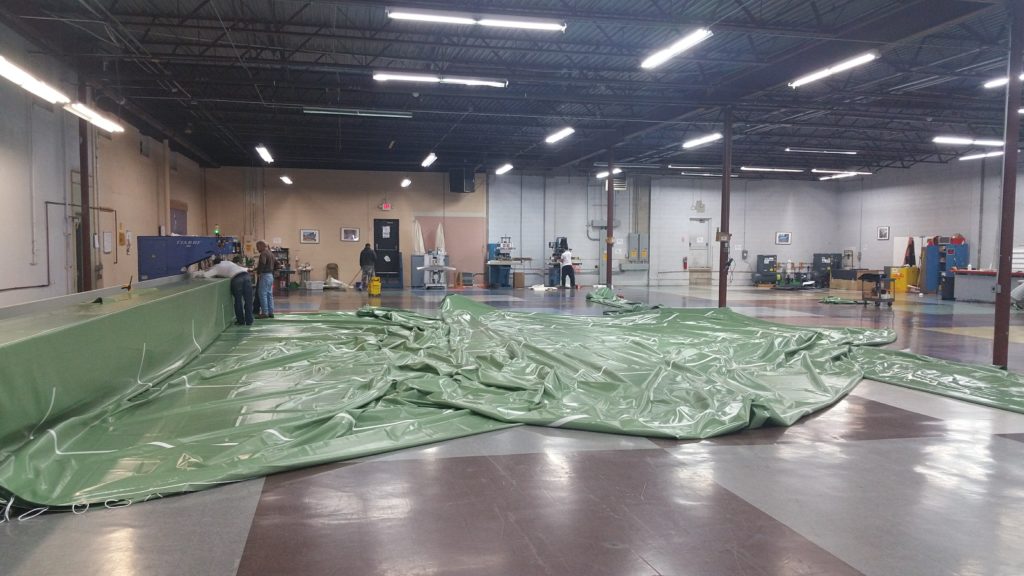
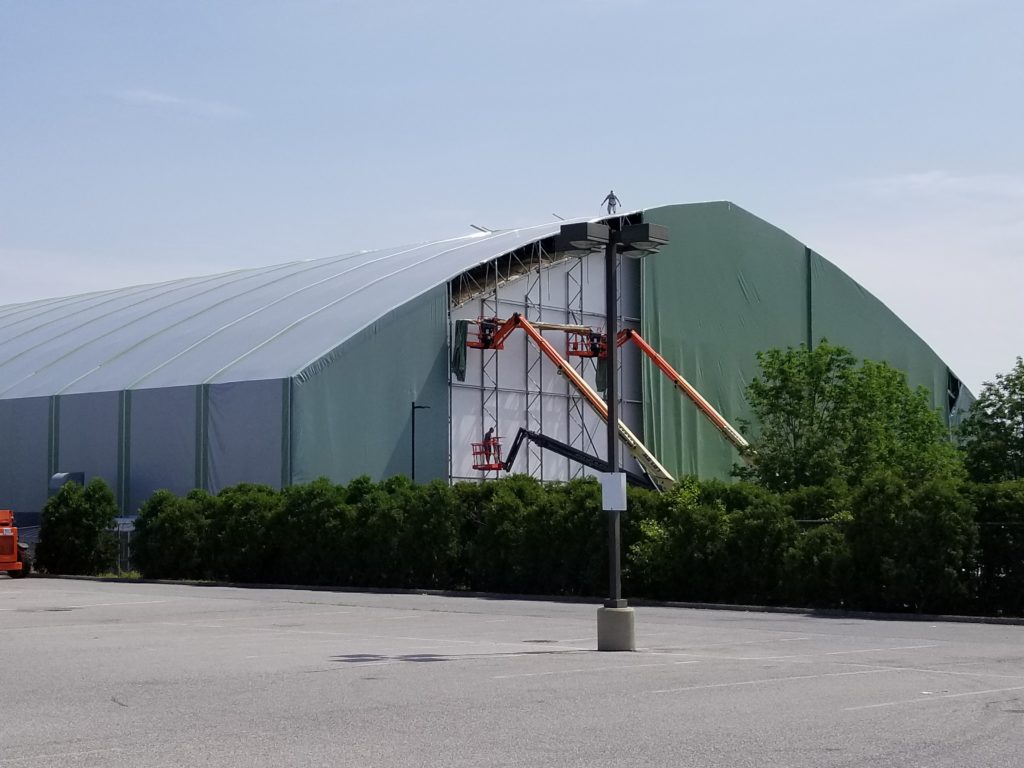
Signature Structures, LLC requested our partnership on a Philadelphia football team’s practice facility that needed replacement of the outer fabric and inner liner fabric of a steel-frame-supported tensioned fabric structure: 200 ft wide by 280 ft long, with 26 ft tall sidewalls and an arched roof. For logistical and scheduling reasons, the inner liner replacement was done first, and before the new liner was installed, new fiberglass insulation was placed in the cavity. The existing fabric system for both the liner and the outer fabric was a large-panel system, tensioned with pipes and pockets. The customer requested color stripes every 20 ft, up and over the roof, for the outer fabric.

2. Working with the existing system

The liner was replaced re-using the existing system. The outer fabric’s existing system, however, required access from the inside, which was impractical with new insulation and a new liner already in place due to the scheduling requirements. An alternate system was therefore proposed for the outer fabric replacement, using smaller panels with keder edges that allowed installing and tensioning the fabric from the outside.

3. The solution: individual keder panels

The design team proposed leaving the old outer fabric in place, which helps with weather protection during fabric replacement. The first preparatory step was to screw new keder track into the top chords of the steel trusses, sandwiching the old fabric between the keder track and the rectangular HSS steel chords. Individual keder panels could then slide between the keder rails. Because the fabric is at all times connected to the frame through the keder edges, the installation schedule was less dependent on the weather. Having a functional facility at all times also allowed the customer to schedule events during the install period, requesting specific dates when no install work would take place.

4. Finding the system that would work best

The chosen tensioning system in any fabric replacement project depends on many factors. In this case, the system needed to accommodate the lack of access from the inside; work with a steel frame that cannot be moved to create side-tension in the fabric panels; keep the facility functional during the install; and, preferably, place the fabric with the warp direction running up and over, so the color stripes could run in the warp direction, for efficiency of manufacturing and aesthetic effect, avoiding cross seams that can collect dirt more easily.

The system that was utilized uses a specially shaped keder track with a second extrusion in the shape of a hat channel. The hat channel is bolted down after the fabric panels are installed on both sides of the keder track, with bolts and nuts that grab the keder track flanges. It pushes the fabric panel down, and the resulting elongation of the fabric creates side-tension. The chosen fabric was a PVC-coated polyester membrane, woven and pre-stressed so that its warp and fill stretch stay closely balanced, and produced specifically for this project. That balance is what allowed the hat channel to tension the keder panels sideways. If the fabric had more stretch in the fill direction, the limited geometrical elongation in the keder-to-keder direction would not have generated enough prestress. That would force either cross-seams to utilize the fabric warp as the main load-carrying direction, or a different tensioning system altogether.

5. Client satisfaction

On this project the balanced warp-and-fill stretch of the specified membrane is what decided the attachment strategy. The customer was very pleased with the end result: the aesthetics they wanted, combined with an install schedule that met their very unique requirements.

Signature Structures carried out the installation. Lightweight Structures does not install. Your project is completed by our network of certified installation partners, working from the engineered panels, keder, and drawings we supply.

Ready to Get Started?

Learn how alternate attachment and tensioning methods can make an existing building perform like new. Explore our structure reskin services, or tell us about your project.

Schedule A Consultation

More From Lightweight Structures

Case Studies

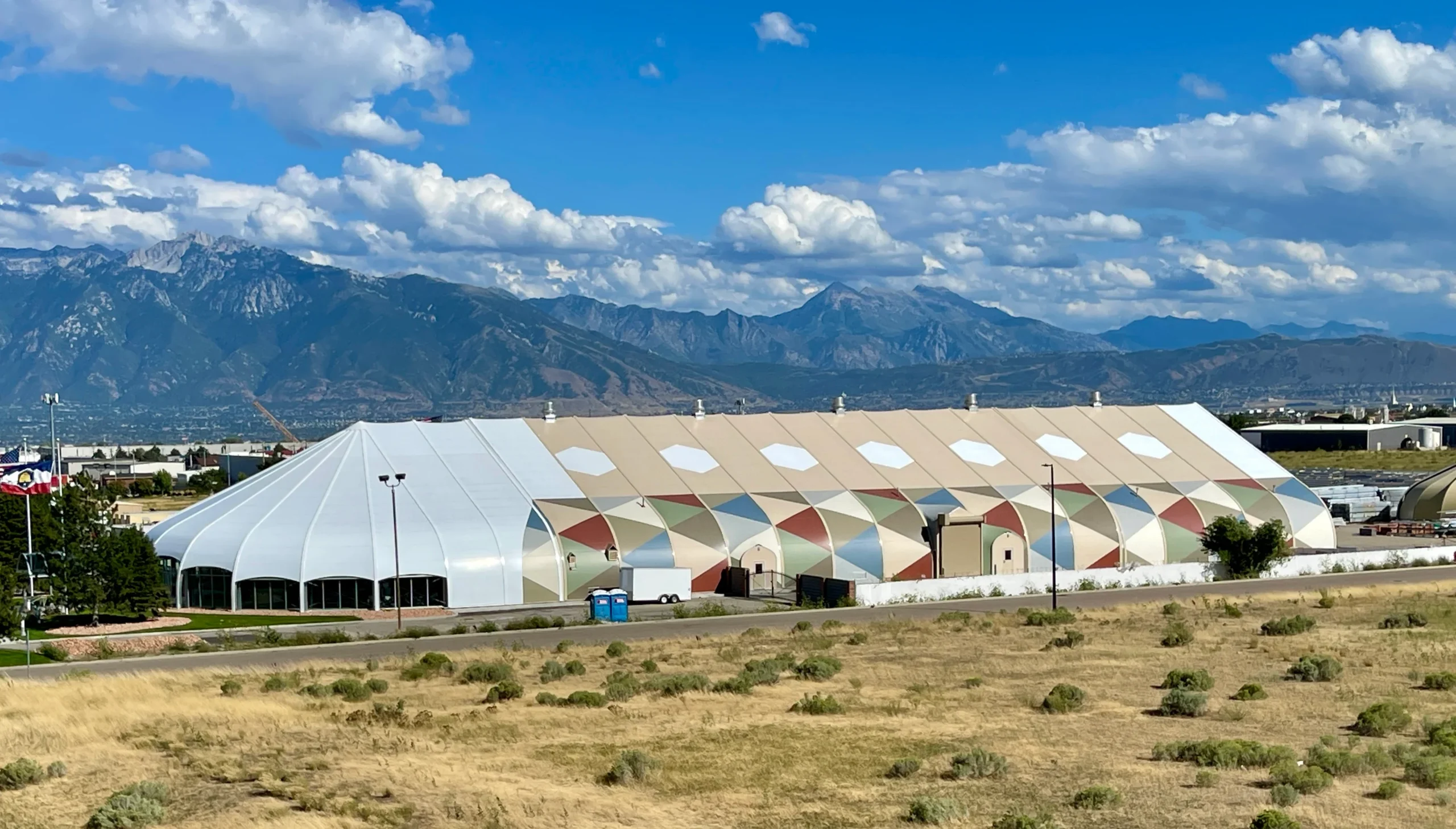
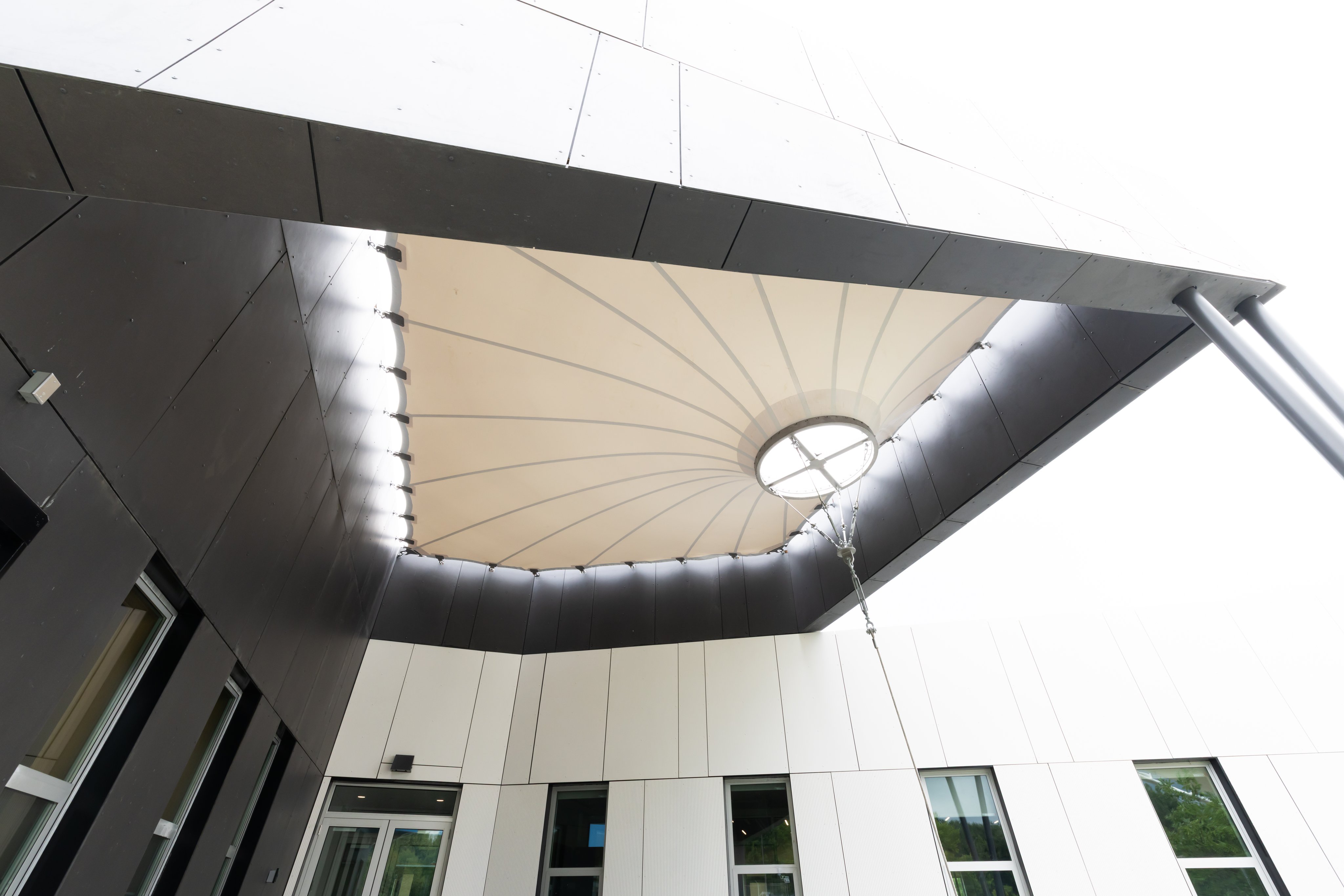
Built in Allentown, on Display in Wooster: The New Tulip Canopy

With the expansion of our Wooster Headquarters came a new architectural feature that reflects the expertise of our team in Pennsylvania.

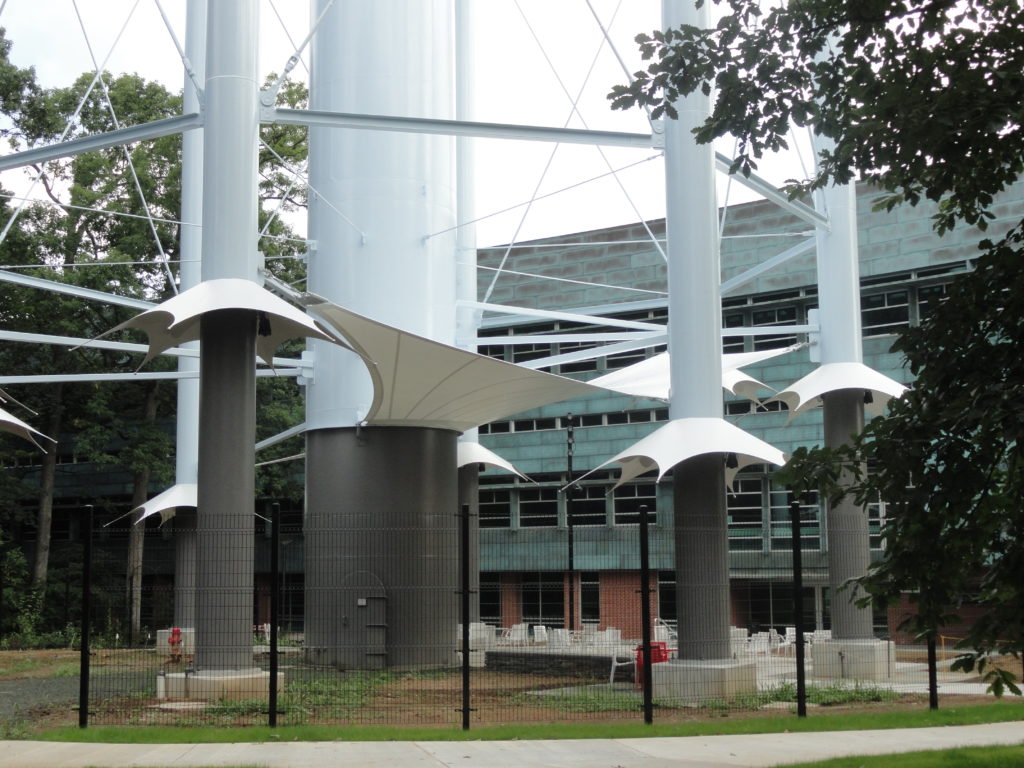
Tensile fabric canopies beneath the Penn State water tower
Case Studies

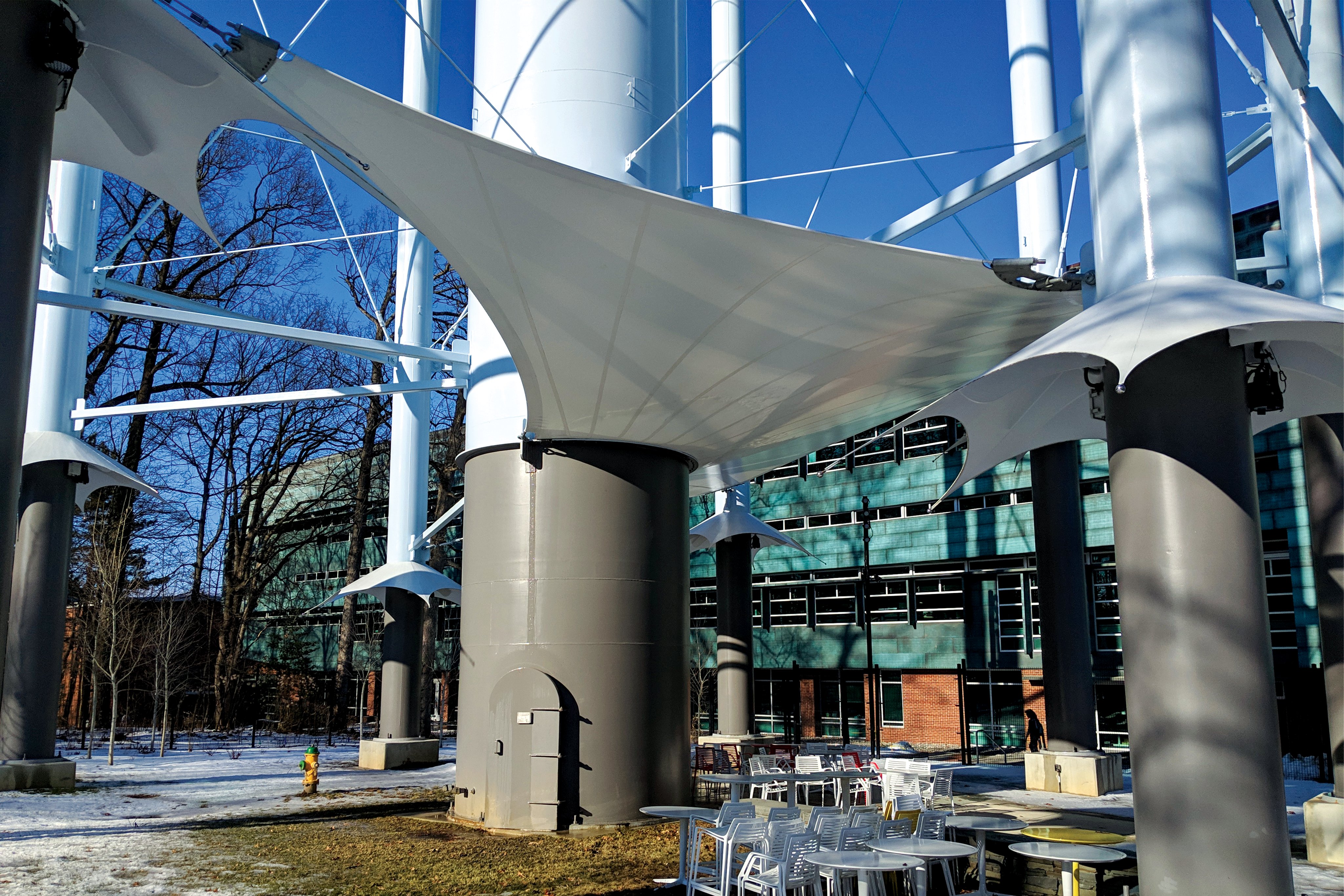
Penn State Water Tower Tensile Canopies

How PVC-coated polyester canopies, fabricated by Lightweight with Signature Structures, created a unique shade structure at Penn State University.

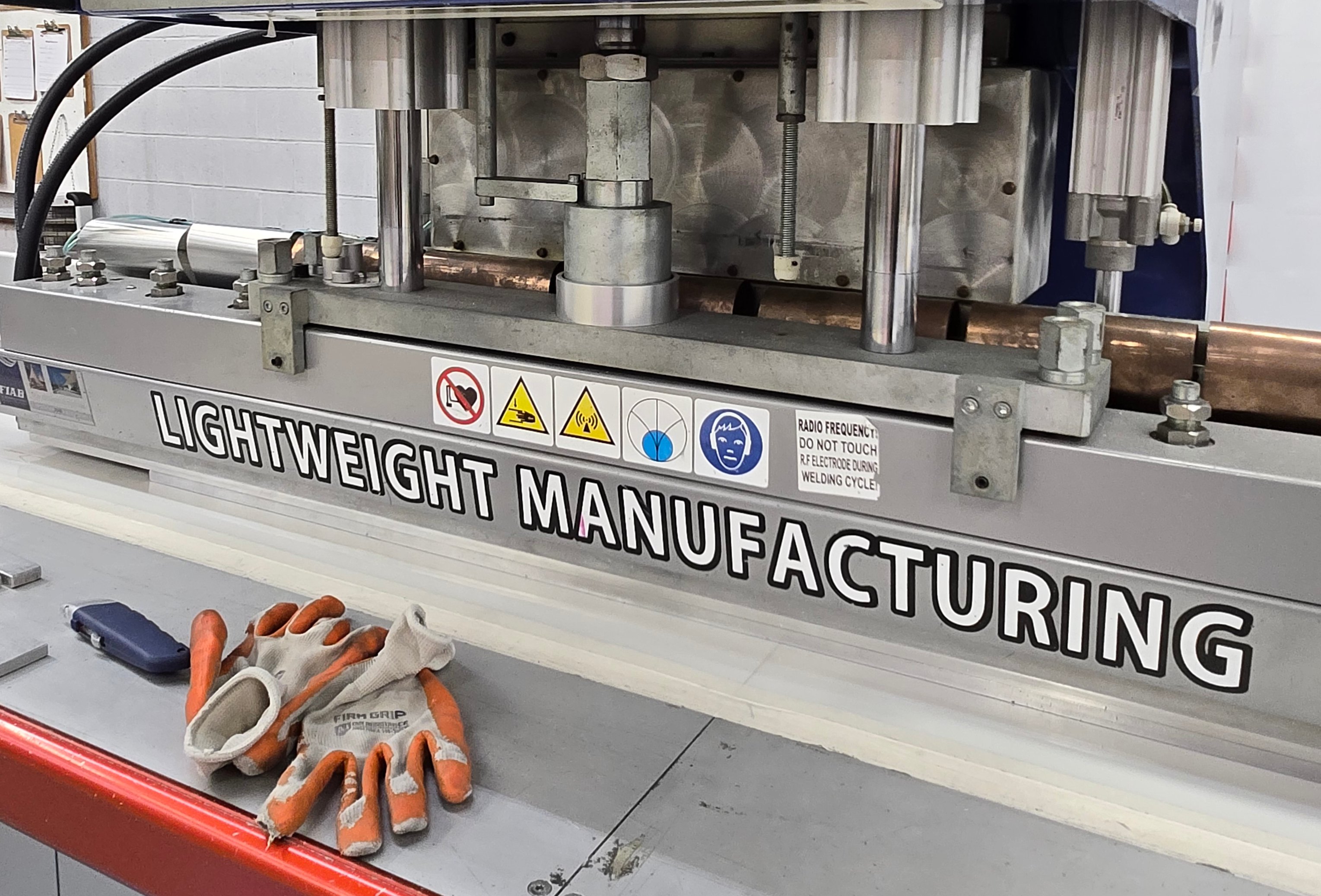
Radio-frequency welding machine on a fabrication bench, with work gloves resting in front of it
Blogs

Types of Industrial Fabric Welds

A practical guide to RF, hot air, hot wedge, and hot bar welding for coated industrial fabrics, including when to use each method.

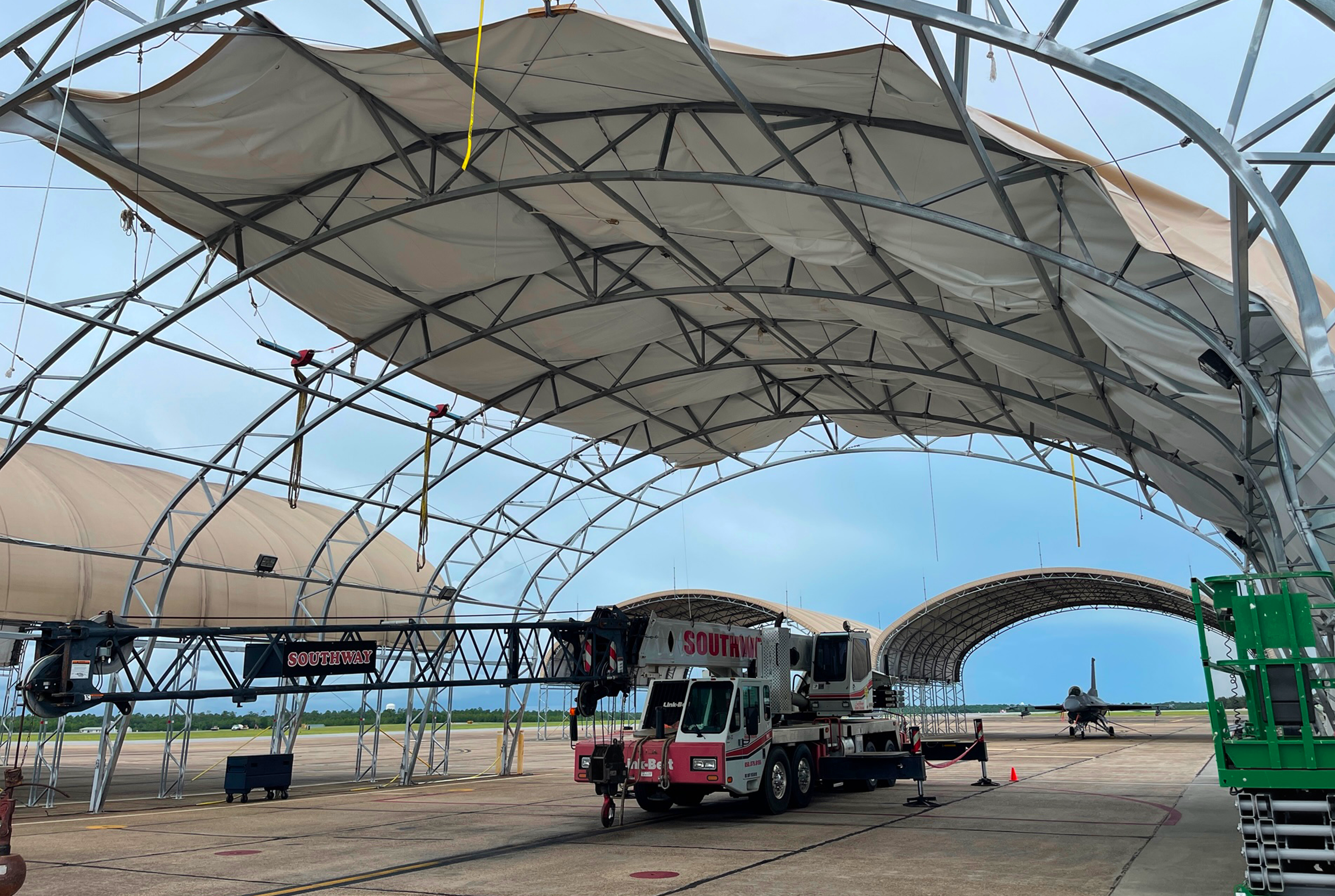
Steel arch hangar frame with a loose fabric cover overhead and a crane parked beneath it
Press Room

Lightweight Joins ESTA

Lightweight joined the Entertainment Services and Technology Association (ESTA), the trade body behind entertainment technology safety standards.

Explore Insights
logo
Privacy Policy Legal

Made in the U.S.A.

Family-owned U.S. manufacturer since 1949

Copyright © 2026 Seaman Corporation. All Rights Reserved.