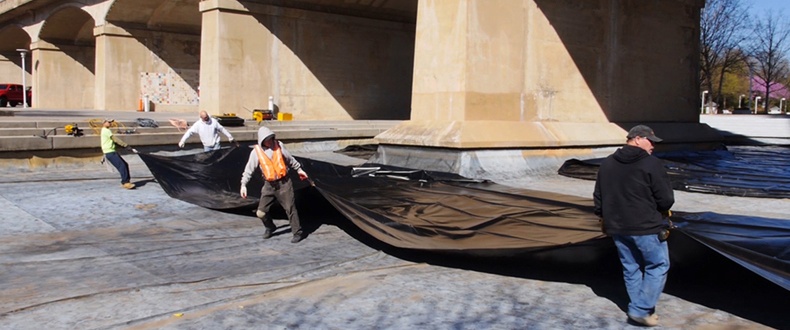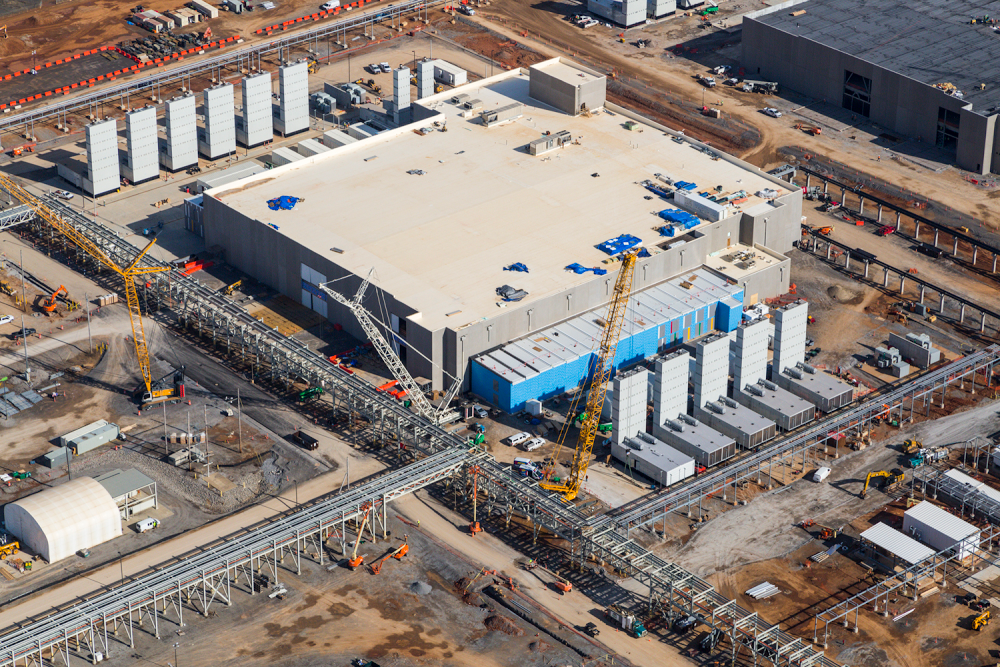

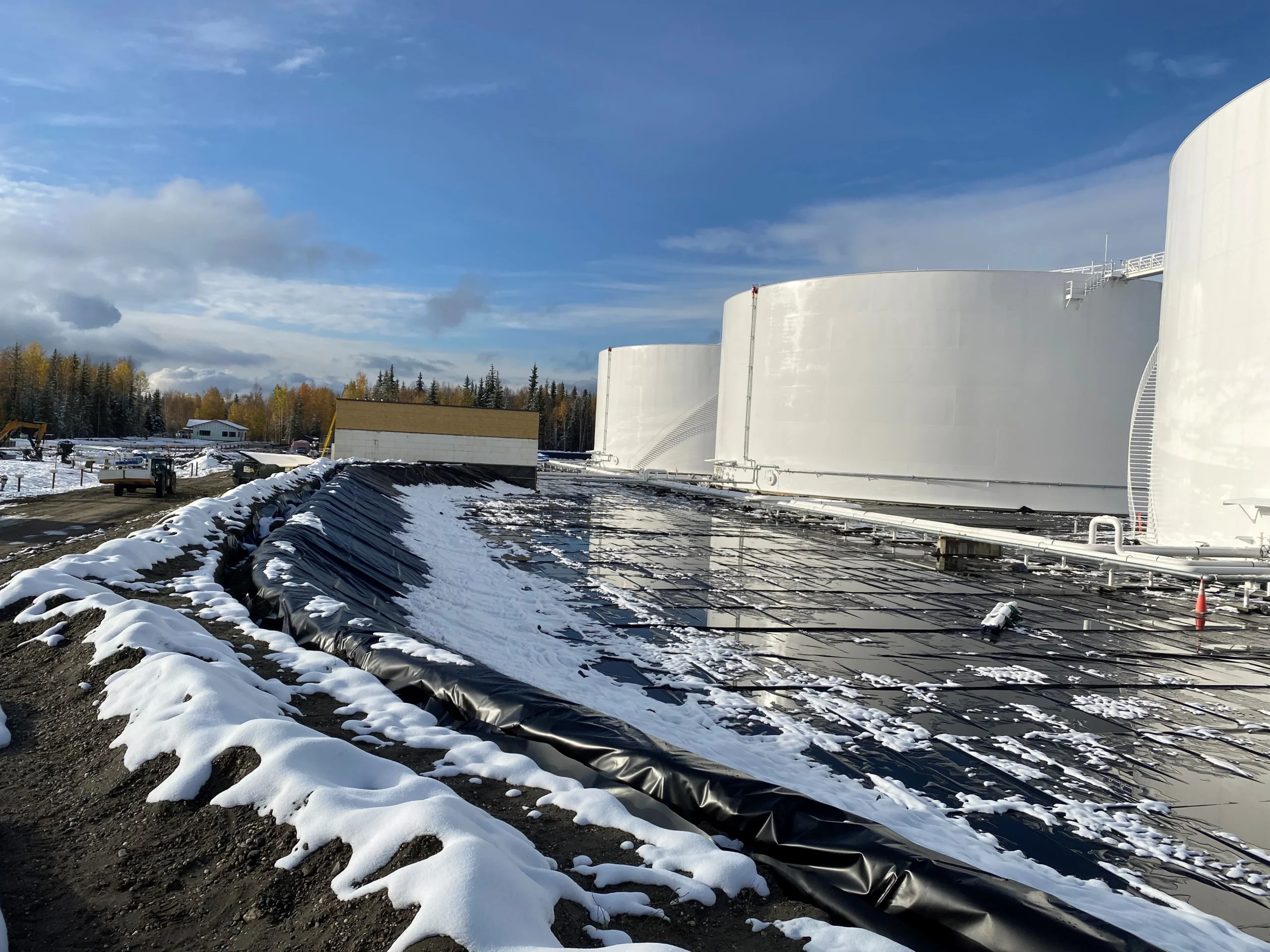

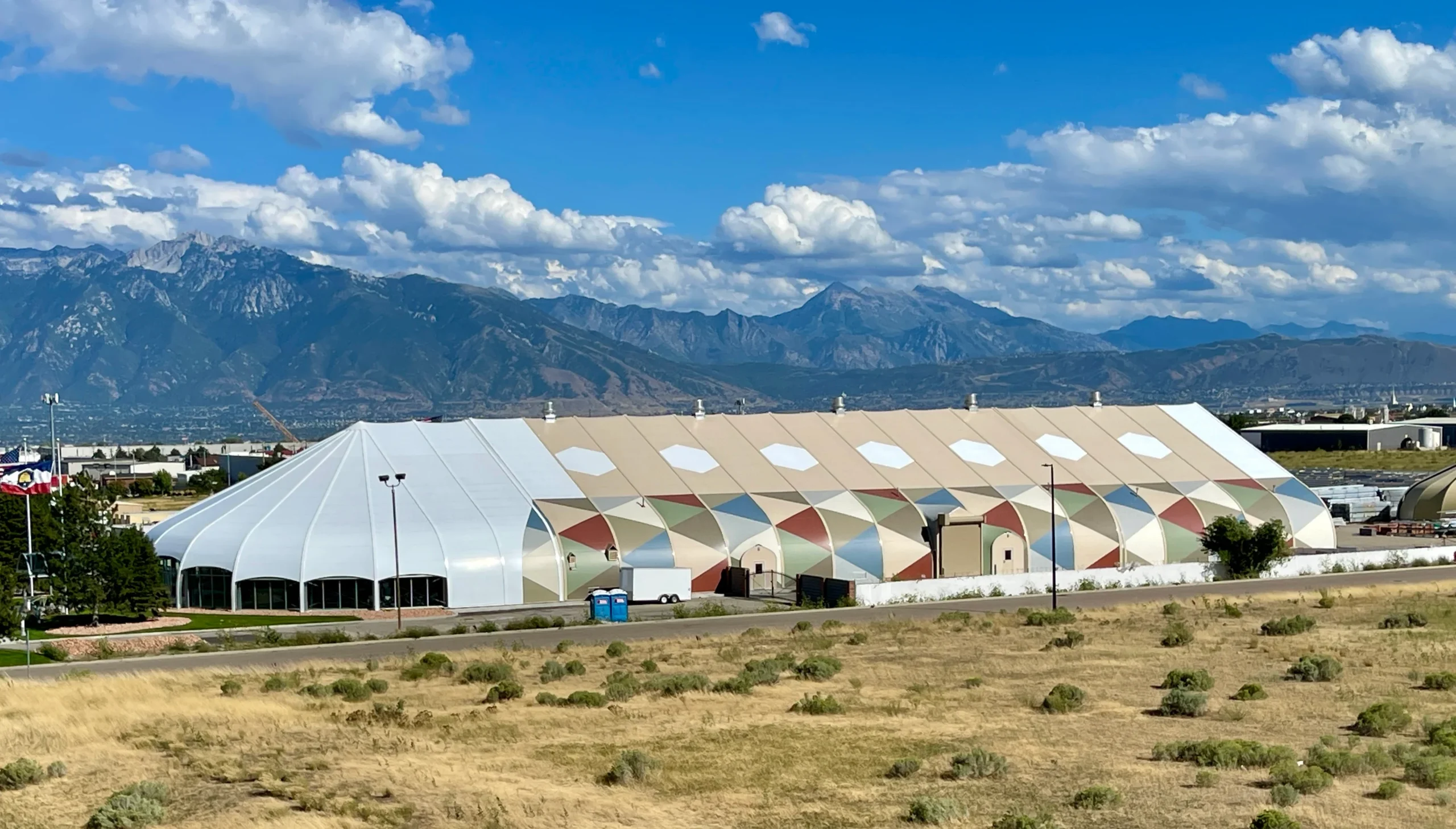


 When specifying a geomembrane, engineers have two high-level options: reinforced or unreinforced geomembranes. Both types of geomembranes have unique properties that make them the best solutions for certain applications and projects. In order to assist you with the specification process, we’ve broken down some of the key components for both geomembranes below.
Reinforced Geomembranes
Reinforced geomembranes can be further broken down into either coated or laminated geomembranes. Coated geomembranes are engineered with a molecular bond between the base fabric and the outside coating. Laminated geomembranes are comprised of an open base fabric featuring a lighter scrim that is spaced farther apart than that of coated geomembranes.
Due to the way these geomembranes are engineered, they can be more flexible and durable than unreinforced liners, even though the thickness for reinforced geomembranes falls into the 20-60 mil range. Reinforced geomembranes derive their strength from the base fabric, rather than relying on strength derived from thickness alone.
Another advantage of reinforced geomembranes is the fact that this material can be prefabricated in a controlled area. As a result, field seaming is reduced and installation mishaps are lessened.
Applications
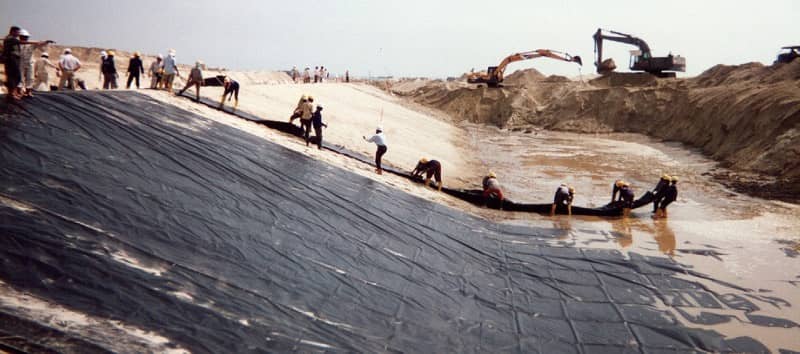
Reinforced geomembranes have a variety of applications, whether it be as a floating cover or a secondary containment unit. However, reinforced geomembranes reign supreme for projects where a steep side slope is present. Unreinforced geomembranes have the ability to collapse under their own weight in steep side slope scenarios, so it’s best to specify a reinforced geomembrane for these applications to avoid failures.
Unreinforced Geomembranes
Unreinforced geomembranes are manufactured through an extrusion process or a calendered process. Unlike reinforced geomembranes, there is no base fabric present. The strength from this material comes from the overall thickness of the membrane, with the thickness ranging from 5-200 mil (extruded) and 10-80 mil (calendered).
Although unreinforced geomembrane panels can initially be manufactured wider than reinforced geomembranes, unreinforced geomembranes are welded together at installation sites. This can leave the unreinforced geomembrane susceptible to failures. When exposed to sunlight for too long, unreinforced geomembranes can experience thermal expansion and cracking. Due to this, the applications for unreinforced geomembranes should be limited to avoid any failures or heavy maintenance/replacement costs down the road.
Applications
Unreinforced geomembranes are most commonly specified for projects in which the geomembrane will be buried, such as landfill liners. It’s important to note that unreinforced geomembranes can still experience failures due to thermal expansion when buried. You should also avoid specifying unreinforced membranes as floating covers due to the inevitable direct exposure to UV and thermal expansion contraction.