Skip to content
logo
Commercial & Public Spaces Data Centers Food & Beverage Government & Emergency Response Manufacturing Power, Oil, & Gas Sports & Leisure Transportation & Infrastructure Water & Wastewater Management
feature image

Commercial Roofing

logo-fibertite
Geomembranes

Geomembranes

logo-xr
Architectural Fabrics

Architectural Fabrics

logo-architectural
Keder samples fabricated by Lightweight Structures

Tensioned Fabric Solutions

Lightweight Structures
Innovative Fabric Solutions

Industrial Fabrics

logo

About Seaman Corporation

Seaman Corporation is a privately held, multi-generational family-owned U.S. manufacturer and trusted provider of protective solutions, delivering high-performance industrial coated fabrics since 1949.

Read More
Corporate Responsibility Our Impact Our History Leadership and Governance Careers

Our Insights

Explore Our Insights
Case Studies Competitive Comparisons Blogs Press Room Webinars

Contact Seaman
Corporation

800-927-8578 Send A Message Now

Locations

World Headquarters

Seaman Corporation
1000 Venture Boulevard
Wooster, Ohio 44691

330-262-1111 330-263-6950

Bristol, Tennessee

Seaman Corporation
PO Box 3946
225 N. Industrial Drive
Bristol, TN 37620

423-989-5200 423-989-5215

Whitehall, Pennsylvania

Lightweight Structures
1139 Sumner Avenue, STE 1
Whitehall, PA 18052

610-435-4720 610-465-8866

More ways to Connect

Careers
Credit Application
Lightweight Structures™
Applications Services Products Documents Contact Online Store
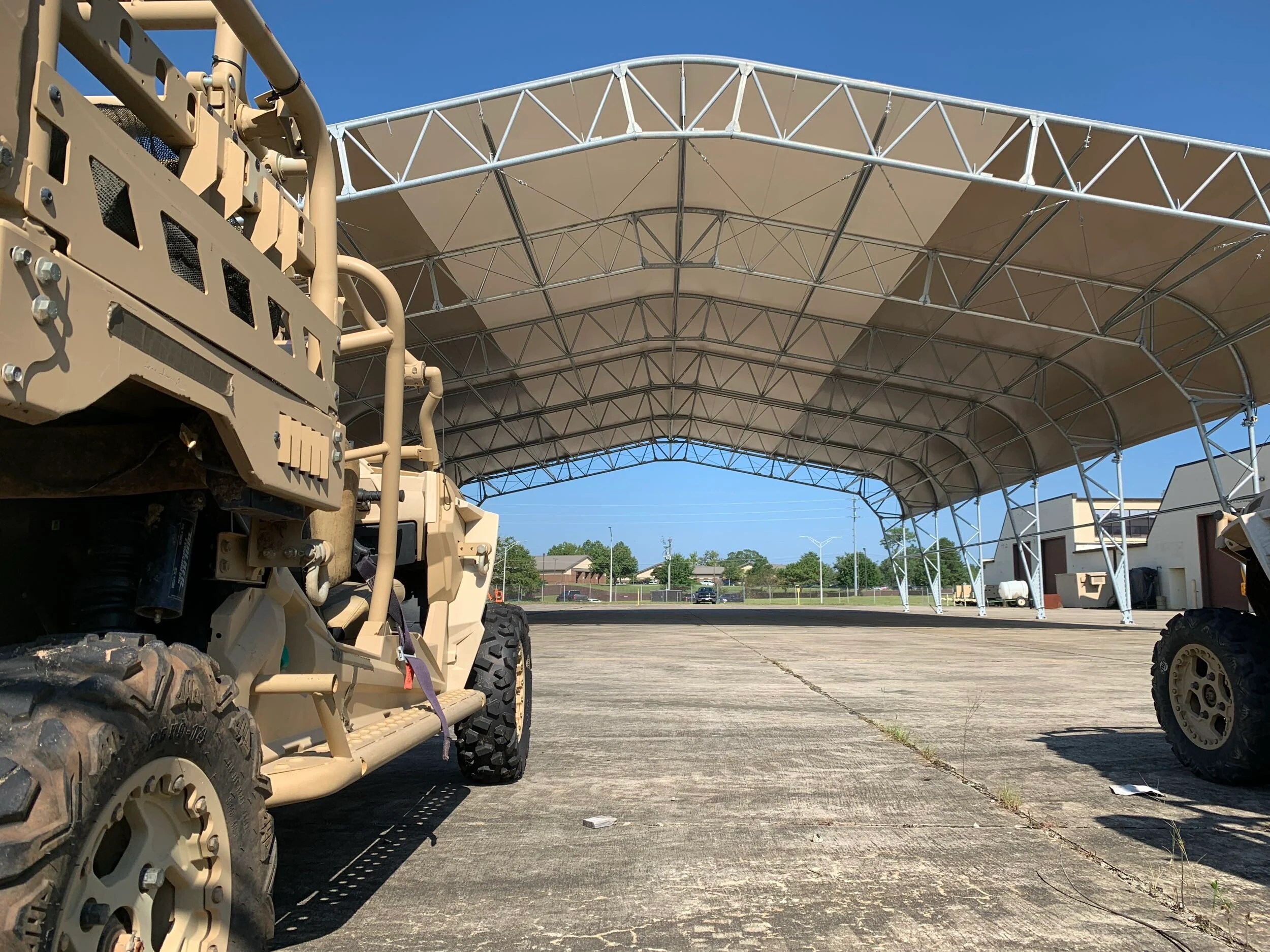
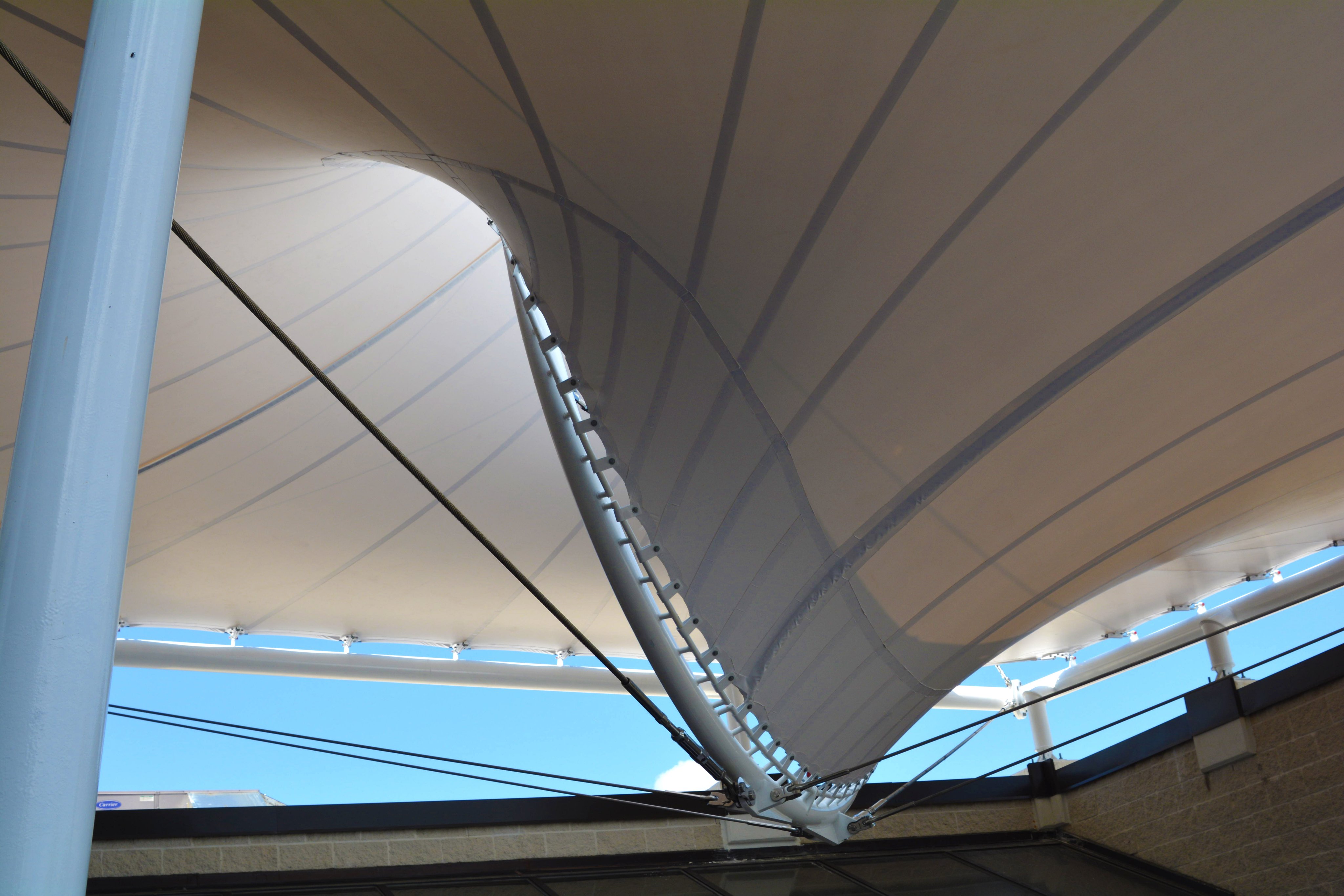
Tensile fabric shade canopy tensioned on a steel frame, backlit by blue sky
Lightweight Structures

The Right Fabric for the Job, Backed by the People Who Make Fabric

Choose from seven fabric types backed by decades of engineering and manufacturing expertise.

Which Fabric Is Best for Your Tensile Structure?

The right fabric for a tensile structure depends on several factors, including the structural loads the membrane needs to carry, expected service life, environmental exposure, daylight requirements and local fire and building codes.

Lightweight Structures fabricates panels from the material the structure calls for. Our work includes coated fabrics manufactured by our parent company, Seaman Corporation, as well as specialty membranes we source from the appropriate manufacturer when a project calls for a material Seaman does not produce.

Tensile fabric shade canopy tensioned on a steel frame, backlit by blue sky

Where Do Our Tensile Structure Fabrics Come From?

Lightweight Structures is not a fabric distributor. We engineer and fabricate with coated fabrics and films, including those made by our parent company, Seaman Corporation.

Seaman Corporation has produced high-performance membranes from yarn through weaving and knitting, coating, and finished membrane since 1949. Seaman’s architectural line is Shelter-Rite®. Where a structure needs a membrane Seaman does not make, such as PTFE-glass, ePTFE, or fluoropolymer film, we specify it from the mill that makes it and fabricate it at Lightweight Structures.

Knowing how a membrane is built is what makes a recommendation worth having: how the scrim is woven, what the coating contributes, and what changes when a topcoat changes. Lightweight Structures does not install. Your project is completed by our network of certified installation partners.

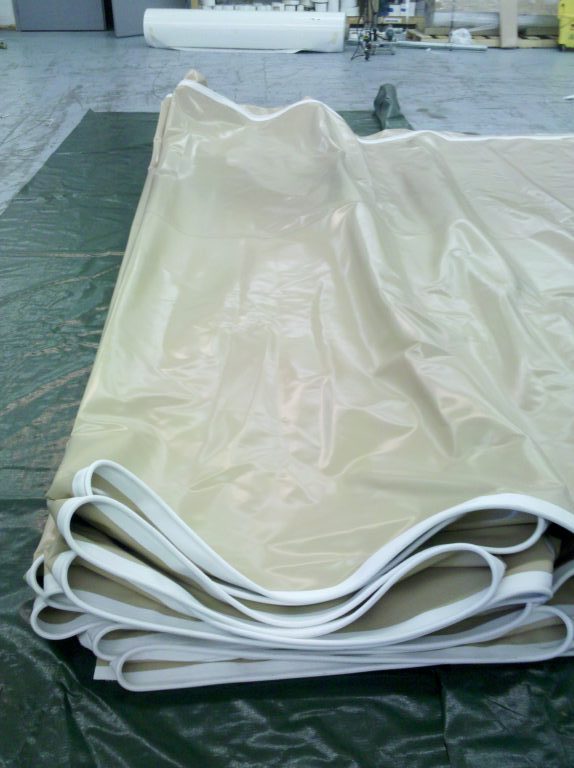
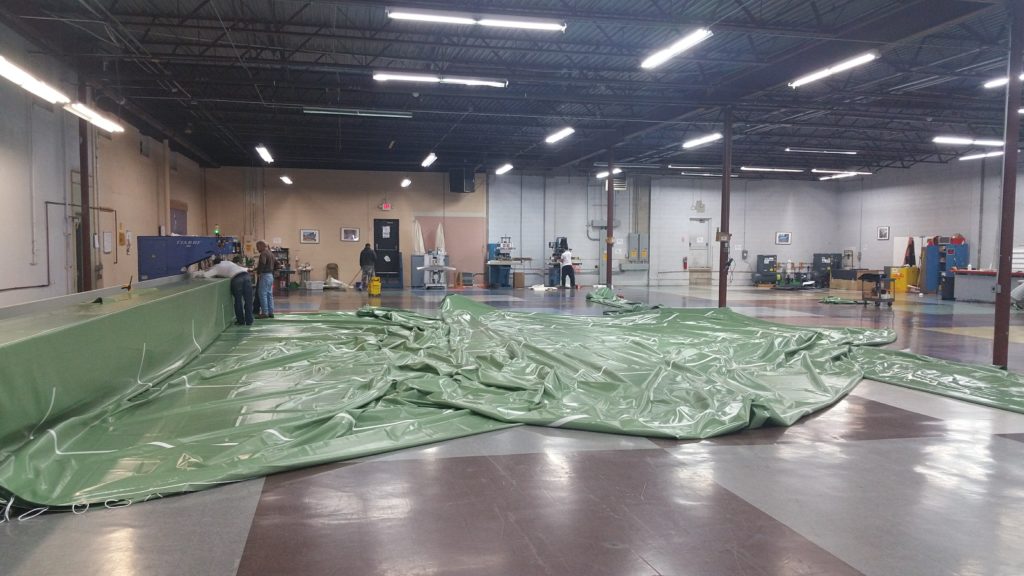
Folded coated fabric panel with welded edges on a shop floor

How a Coated Membrane Is Built

A coated fabric starts as a woven scrim. Liquid PVC is knife-coated onto both faces of that scrim, and a finishing topcoat goes over the coating. The topcoat does two jobs. It seals off the plasticizers in the PVC, which otherwise migrate to the surface and leave it tacky and dirt-holding, and it adds UV resistance that extends the life of the membrane.

Which topcoat is on the roll decides how the panel gets fabricated. An acrylic and PVDF blend stays directly weldable, so seams go down without surface preparation. A pure PVDF topcoat stays cleaner for longer but is not directly weldable: an overlap weld requires abrading the topcoat off the weld zone first, and that step has to be planned into the panel layout.

The scrim matters too. Woven and weft-inserted scrims behave differently under tension, and a woven fabric shows stronger crimp interaction: it tightens in one direction as it is tensioned in the other.

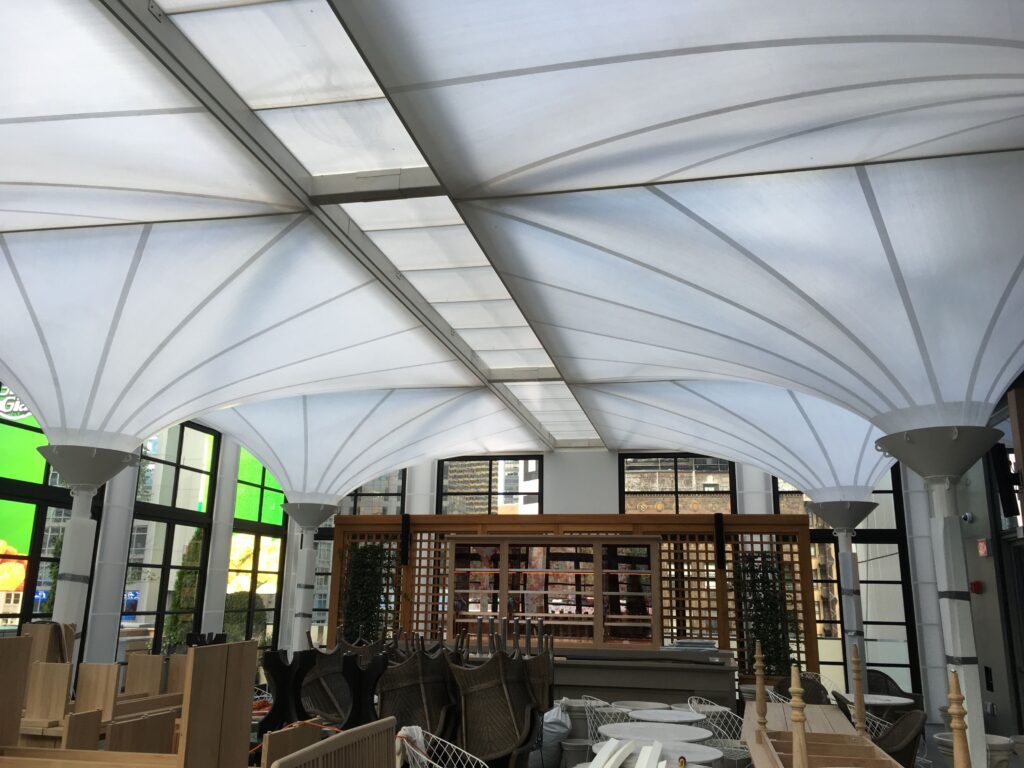
Translucent architectural fabric canopy over an interior dining space

What the Material Changes in Fabrication

Each family is joined differently. PVC-coated polyester welds directly unless it carries a pure PVDF topcoat, in which case the weld zone is abraded first. PTFE-glass is welded with a hot bar, which applies temperature and pressure, using FEP tape as the welding tape to produce high-strength overlapping seams.

Handling differs just as much. Glass yarns do not tolerate sharp folding or repeated handling the way a coated polyester does, and patterning tolerances are tighter. ePTFE folds repeatedly without losing strength or cracking its coating, which is why it goes on retractable canopies and operable roofs where PTFE-glass would fail at the fold lines.

Sewn details need their own thread. Ordinary polyester sewing thread is not UV-stable and fails long before the fabric around it does, so outdoor work uses thread spun from ePTFE yarn.

Key Benefits

Choosing Fabric? Here’s What You Can Expect From Us

An Honest Recommendation

Every material has a wrong project. We will tell you when PTFE-glass is more permanence than your structure needs, and when a solution-dyed woven cannot carry the tension you are asking of it. That comes before a purchase order, not after.

The Fabric Maker Is In-House

Our parent company, Seaman Corporation, has run the whole chain since 1949: yarn, weaving and knitting, coating, finished membrane. The material knowledge is first-hand rather than read off a data sheet. Domestic manufacturing also means lead times into our warehouse are generally shorter than for overseas mills.

Design Through Fabrication

Our scope is the engineered fabric and panel system: design, engineering, and fabrication. Installation is completed by our network of certified partners.

Not Sure Which Fabric Fits?

Tell us your span, exposure, and project requirements. We’ll recommend the right fabric or send samples so you can see and compare them for yourself. Explore our seven fabric families below or contact our team to learn more.

Request A Sample

How the Seven Families Compare

PVC-Coated Polyester Fabric

The workhorse of the category. A polyester scrim coated both sides with PVC gives weather resistance, a smooth weldable surface, a full color range, and UV protection for the yarns underneath. Higher architectural grades add a topcoat that protects the coating and keeps the surface cleaner. Best value across tensile, frame-supported, air-supported, and tent work.

PTFE-Glass Fabrics

PTFE-coated woven fiberglass: the strongest and longest-lasting membrane available, with non-combustible glass yarns and a surface rain rinses clean. The choice for permanent landmark structures. Less forgiving to fabricate, and priced accordingly.

ePTFE

Woven expanded-PTFE yarns under a clear fluoropolymer coating. Highly translucent, does not yellow, and, unlike PTFE-glass, folds repeatedly without damage. The material for retractable roofs, operable canopies, and sculptural shapes.

Fluoropolymer Film

The transparent end of the spectrum. Unreinforced ETFE foil is built into inflated cushion assemblies; yarn-reinforced film tensions as a single layer with catenary detailing. Both read closer to glass than to fabric, at a fraction of the supporting structure.

Polyethylene

Woven high-density PE tapes coated with low-density PE for a weathertight surface. Light, UV-stabilized, fire-resistant, recyclable, and economical: a practical answer for shorter-service and cost-driven covers.

Solution-Dyed Woven Fabric

Pigment goes into the polymer before the fiber is extruded, so color runs through the filament instead of sitting on it. Breathable, soft-handed, canvas-like fabrics for awnings, sidewalls, liners, and decorative shade. Fire-rated and weathertight finishes are available.

PVC Mesh

The same coated yarns as solid PVC fabric, woven open. Shade and screening rather than a weathertight roof, lower wind load on the frame, and a façade that stays visually open. Micro-perforated versions serve as acoustical liners.

Data sheets for every family on this page are in the Documents library.

Products You Can Trust

Seaman Corporation has made coated fabric in the United States since 1949 and sells its architectural line under the Shelter-Rite® name. A number of the grades we regularly fabricate with come from that line. The full line is at Shelter-Rite Architectural Fabrics.

Our Industry Insights

Case Studies

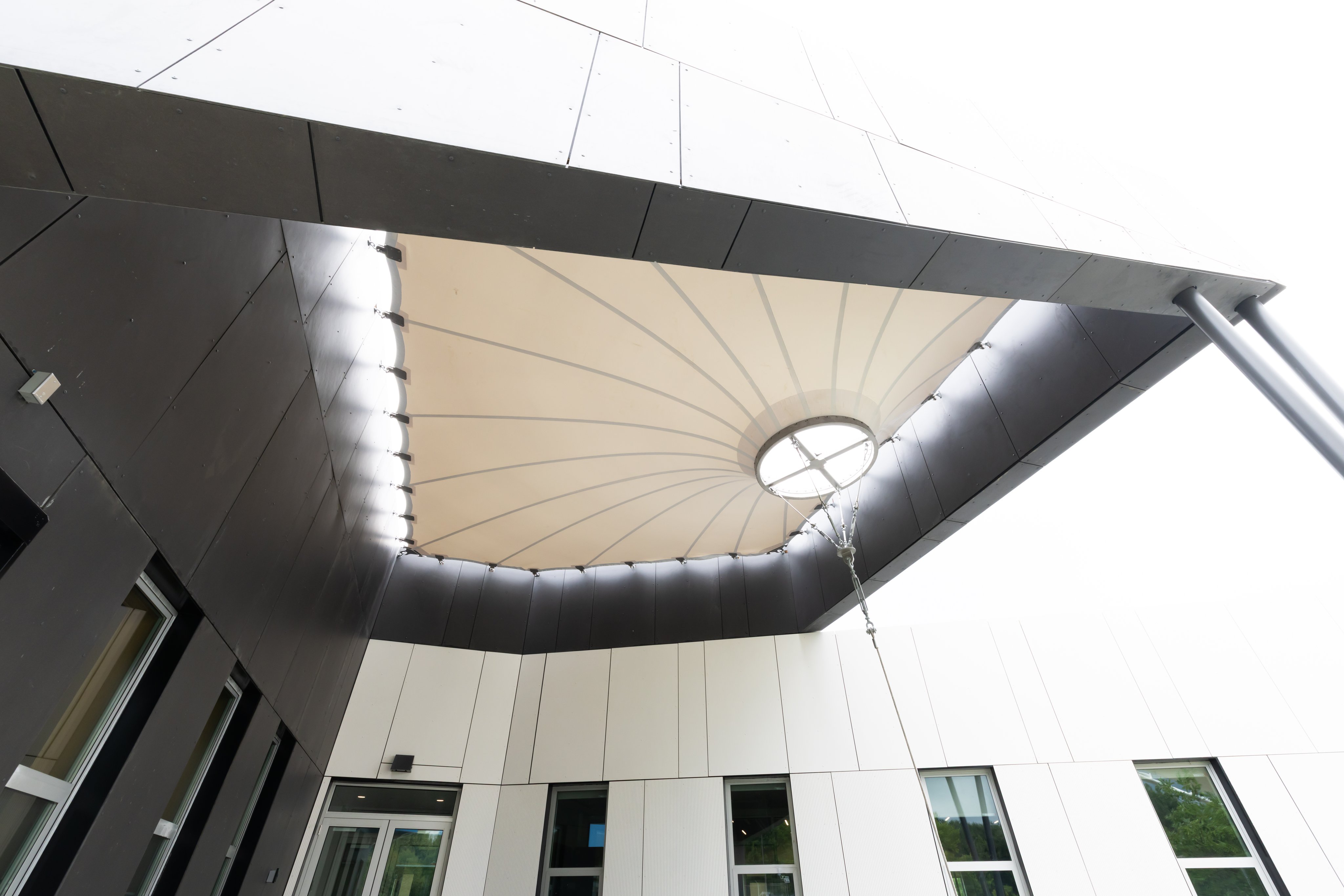
Built in Allentown, on Display in Wooster: The New Tulip Canopy

With the expansion of our Wooster Headquarters came a new architectural feature that reflects the expertise of our team in Pennsylvania.

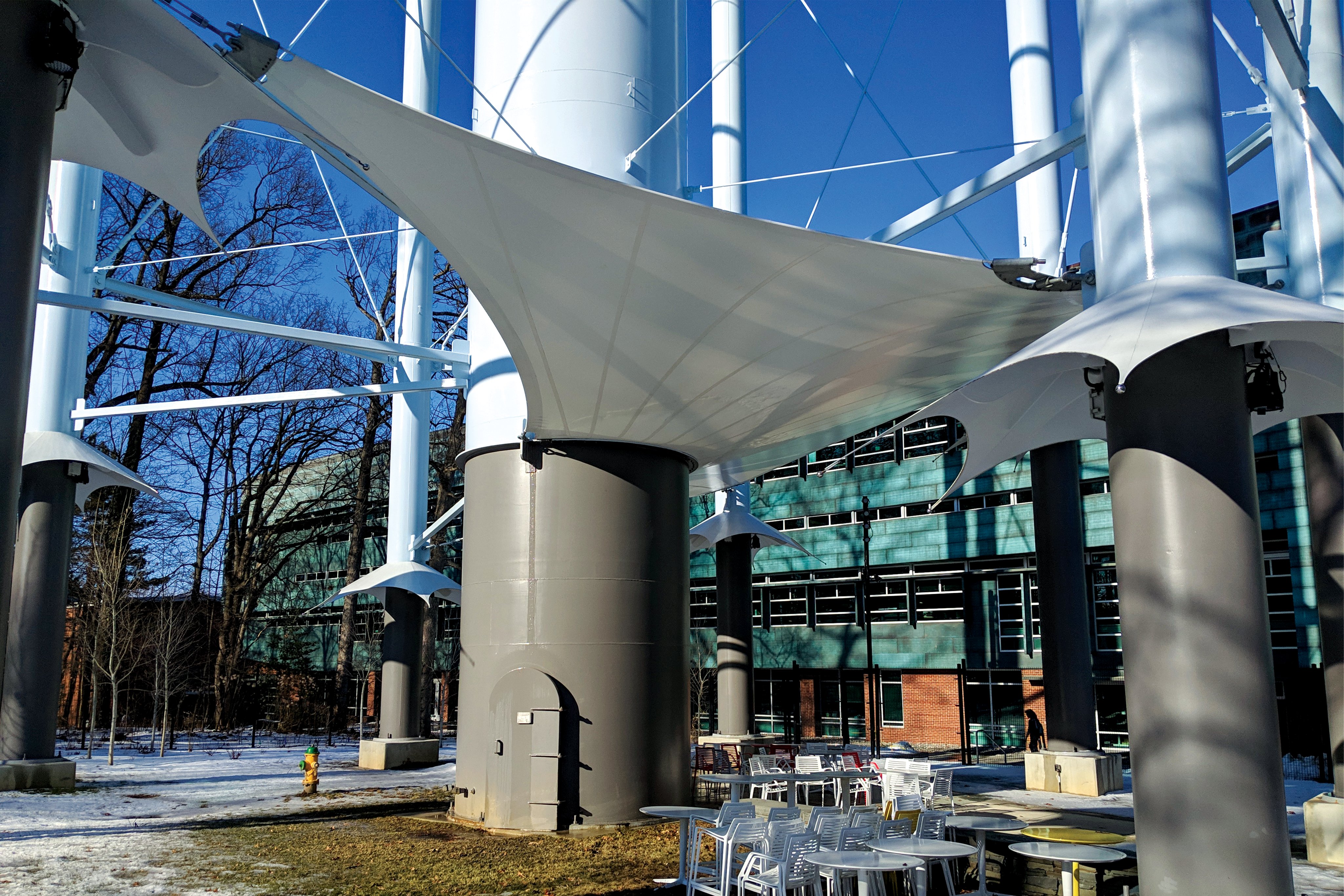
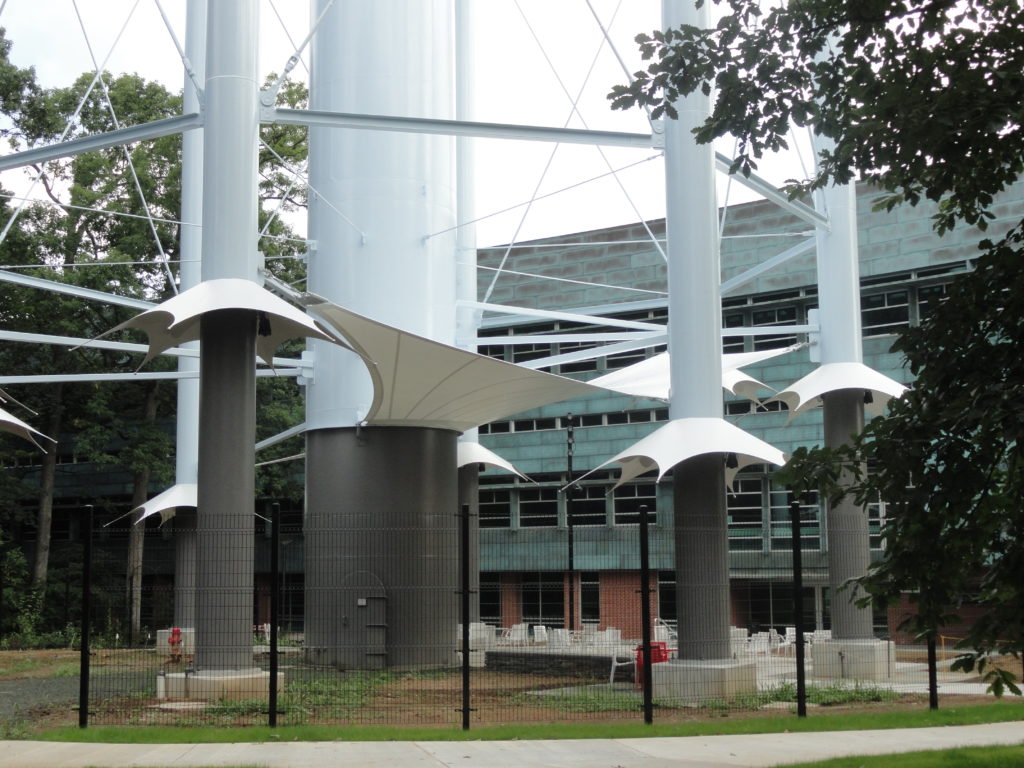
Tensile fabric canopies beneath the Penn State water tower
Case Studies

Penn State Water Tower Tensile Canopies

How PVC-coated polyester canopies, fabricated by Lightweight with Signature Structures, created a unique shade structure at Penn State University.

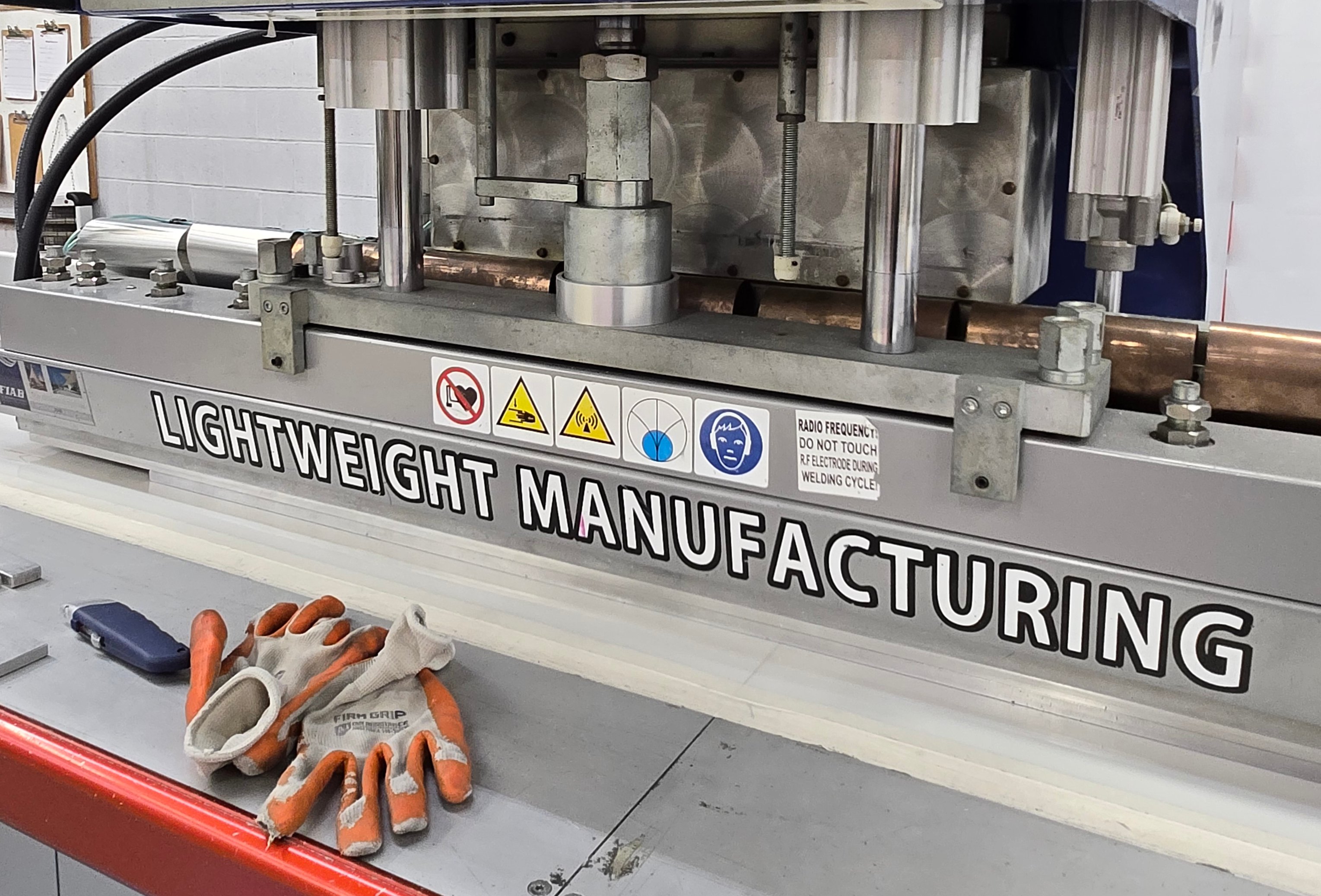
Radio-frequency welding machine on a fabrication bench, with work gloves resting in front of it
Blogs

Types of Industrial Fabric Welds

A practical guide to RF, hot air, hot wedge, and hot bar welding for coated industrial fabrics, including when to use each method.

Keder panels on the reskinned roof of a frame-supported practice facility
Blogs

5-Step Turnkey Reskin Overview

A five-step walkthrough of a turnkey reskin: replacing the outer fabric and inner liner of a football practice facility with keder panels.

Explore Insights

Partners & Memberships

  • ESTA
  • NECPA
  • Advanced Textiles Association (ATA)
  • MATRA
logo
Privacy Policy Legal

Made in the U.S.A.

Family-owned U.S. manufacturer since 1949

Copyright © 2026 Seaman Corporation. All Rights Reserved.